
Sparrow and Welinq want quantum computers to work together through light
A new agreement explores photonic quantum-computing clusters. A working link needs measured performance, not just shared cloud access.
Reading tools for text size, copying, printing and your reading list
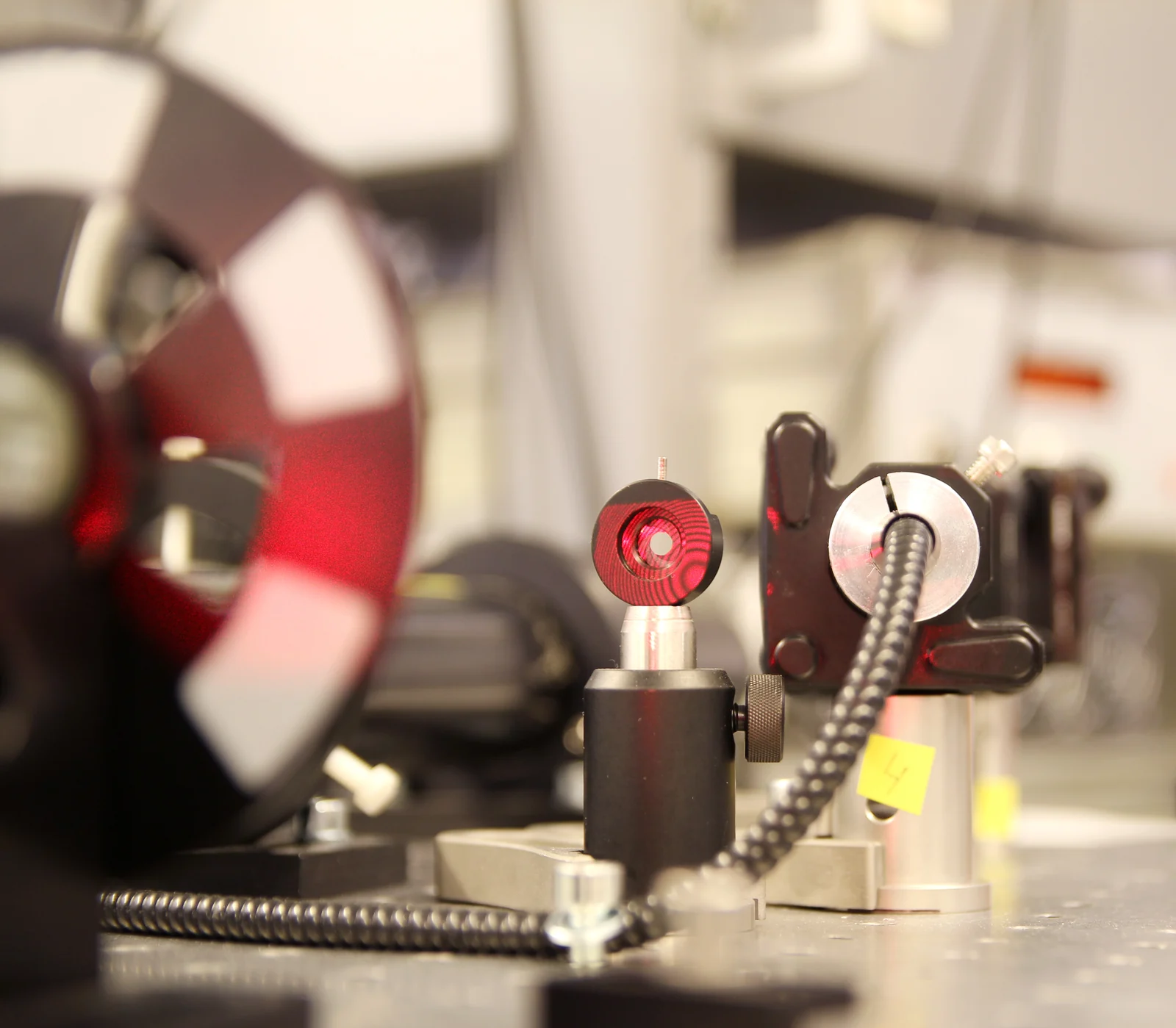

Sparrow Quantum and Welinq announced an agreement on November 10 to explore connecting photonic quantum technology into clusters of quantum computers. Letting customers choose between separate machines is not the same as making those machines participate in one quantum computation.[1][2]
The companies have signed a memorandum of understanding. Their announcements describe integration work they intend to pursue, not a completed joint cluster or a demonstrated improvement in computing performance.[1][2]
Sparrow develops semiconductor sources that produce individual photons, the particles of light, on demand. Welinq develops quantum-networking technology. Their collaboration would examine how Sparrow’s photonic technology could fit into Welinq’s multi-platform approach.[1][2]
For a reader encountering another quantum partnership announcement, the useful question is what must cross the connection. An ordinary network can send instructions and return results. Distributed quantum computation also needs a way to establish and use quantum connections between processing modules.[3]
Why light helps, and what it does not settle
Photonic qubits already use light to carry quantum information. Other types of quantum processor require interfaces between their and photons. Sparrow’s announcement identifies those interfaces and networking as parts of the integration problem.[1]
That makes the partnership technically relevant without making its proposed outcome inevitable. A useful connection needs more than components that work separately. Optical losses and imperfect operations can limit how often usable connections are made and how accurately a joint calculation works.[3]
Welinq presents the collaboration as part of a route toward modular systems for high-performance computing and data centers. Neither partner’s announcement reports a demonstrated link rate, error rate, application benchmark or deployment date for their joint system.[1][2]
Those omissions define what to watch next. How reliably can the components exchange quantum information? How often can a connection succeed? What operation becomes possible across the linked processors? And does using the link improve a meaningful task once communication overhead is counted?
What a real demonstration looks like
Distributed quantum computation is not solely a proposed architecture. In February 2025, a separate Oxford-led team reported an experiment connecting two trapped-ion modules about two meters apart through an optical network.[3]
The researchers demonstrated a quantum gate between circuit qubits in different modules, with a reported average fidelity of 86.2 percent, a measure of how closely the operation matched its intended result. They also ran a distributed version of Grover’s search algorithm on four possible items, with a 71 percent success rate. This was a small controlled experiment, not a demonstration of faster useful database search.[3]
The optical link first had to generate and herald : a shared quantum resource whose successful creation was signaled to the experiment. That stage was probabilistic. The subsequent remote gate could then be executed deterministically using the prepared resource. Calling the gate deterministic does not mean every attempt to create the optical connection succeeded.[3]
That experiment used different hardware and does not validate Sparrow and Welinq’s proposed integration. Its value here is as a concrete example of evidence beyond an agreement: identified modules, a connection, measured operations and a task carried out across them.[3]
The next result worth watching
The new partnership addresses the difficult boundary between quantum components and connected systems. Its next meaningful milestone would be a documented joint demonstration, with the connection’s rate and accuracy measured alongside the computation. Until then, it is a development agreement, not evidence that a larger quantum computer has been delivered.[1][2]