
Skip to content

2026 SELECTION

QubitWire 100

100 people recognized for contributions to quantum computing. Unranked and alphabetical by surname.

An unranked collection. Browse by surname or start with an idea.

Browse by topic
Explain these topics
Error correction
Methods that protect encoded quantum information by detecting and correcting certain errors.
Neutral atoms
A hardware approach that stores quantum information in electrically neutral atoms.
Quantum networks
Links that distribute quantum information or entanglement between locations.
Algorithms & complexity
How quantum calculations work and what resources they require.
Foundations
The concepts and physical principles that quantum information builds on.

The 2026 selection16 of 100 people

About error correction
Error correction
Methods that protect encoded quantum information by detecting and correcting certain errors.

Jump to surname

B

1 person

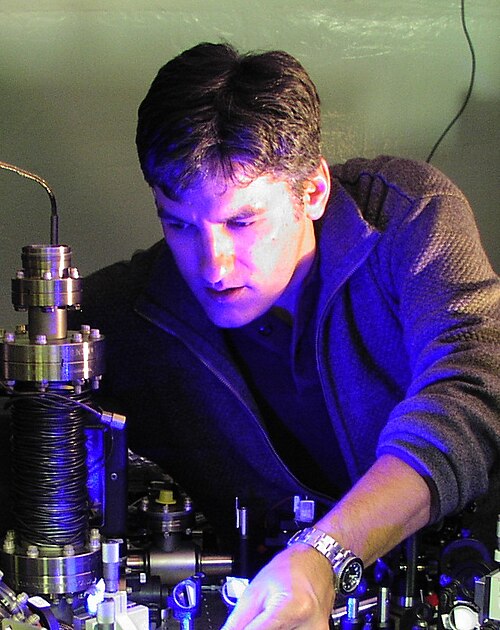
Bluvstein develops reconfigurable neutral-atom processors, helping demonstrate coherent transport of entangled atoms and programmable operations on encoded logical qubits in collaborative laboratory experiments.

Caltech / Oratomic

Neutral-atom quantum-computing researcher; Visiting Associate at Caltech

Read profile
Why included? 4 sources

Bluvstein’s research addresses the geometry of a quantum computer: which qubits can interact, how they move, and how information is protected while operations proceed. His coauthored transport experiment used movable atom arrays to create flexible connectivity. A subsequent logical-processor experiment combined that architecture with encoded qubits and error detection. The significance is a concrete route from physical control to logical operations, supported by measured experiments. Harvard’s alumni page lists a Caltech visiting appointment, and Oratomic lists him on its team.

Quantum hardwareError correction

Documented work base: United States

Identification checked Explore the contributions and sources
G

1 person

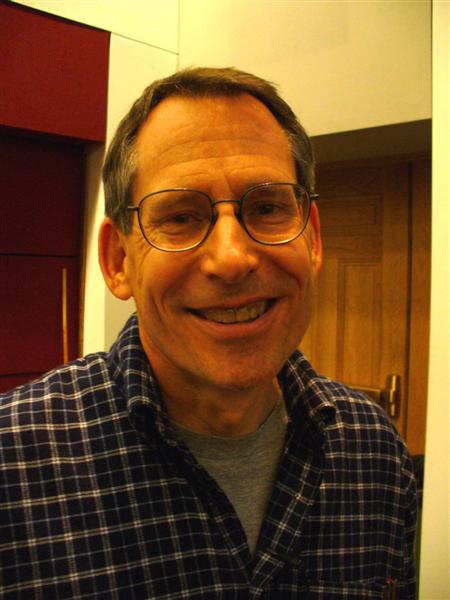
Gottesman develops ways to protect quantum information, giving researchers a mathematical language for diagnosing errors while preserving the information a calculation needs.

University of Maryland

Brin Family Endowed Professor in Theoretical Computer Science and Co-Director of QuICS

Read profile
Why included? 4 sources

Quantum information cannot be protected by treating an unknown quantum state as an ordinary file to copy. Gottesman’s stabilizer formalism instead supplies a structured language for describing encoded information and the checks used to diagnose errors. His work with Alexei Kitaev and John Preskill on oscillator encoding connects continuous physical systems with discrete logical information. These contributions make the relationship between a code, the operations it supports and its resource cost easier to reason about across hardware platforms. The current QuICS profile identifies him as its co-director and the Brin Family Endowed Professor in Theoretical Computer Science at the University of Maryland, with an appointment in the Institute for Advanced Computer Studies.

Error correctionFoundations

Documented work base: United States

Identification checked Explore the contributions and sources

K

1 person

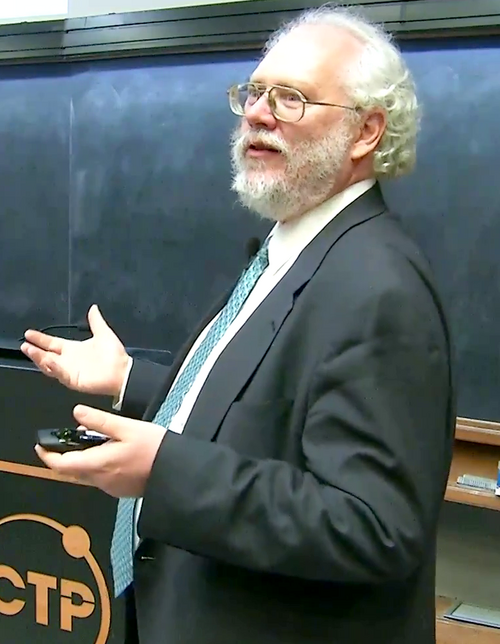
Kitaev developed foundational approaches to protecting quantum information, including computation with anyons and the oscillator encoding now known as the Gottesman–Kitaev–Preskill code.

California Institute of Technology

Ronald and Maxine Linde Professor of Theoretical Physics and Mathematics, Caltech

Read profile
Why included? 3 sources

Kitaev’s work changes how quantum information can be represented and protected. His anyon construction connects fault-tolerant operations to the structure of a two-dimensional quantum system. With Gottesman and Preskill, he also showed how a discrete logical qubit could be embedded in a continuous-variable oscillator and protected against small shifts. These ideas provide architectural building blocks across different hardware programs. They are theoretical constructions whose physical realization requires additional experimental control and error-management work.

Error correctionFoundations

Documented work base: United States

Identification checked Explore the contributions and sources
L

1 person

Lukin connects quantum optics with computation and communication, contributing to atomic-ensemble networking protocols and experiments that process encoded logical qubits in reconfigurable neutral-atom arrays.

Harvard University

Joshua and Beth Friedman University Professor, Harvard University

Read profile
Why included? 3 sources

Lukin’s contributions span ways to distribute quantum information and ways to process it while controlling errors. The Duan–Lukin–Cirac–Zoller proposal uses atomic ensembles and optical measurements to address long-distance communication. More recently, his collaborations have operated encoded logical qubits in reconfigurable atom arrays, testing how logical control and error detection improve computations. These strands share a focus on controlling light and matter at the level of quantum information, with achievements attributed to their full research teams.

Error correctionQuantum networks

Documented work base: United States

Identification checked Explore the contributions and sources
M

1 person

Develops trapped-ion quantum computers and photonic interconnects, linking precise control of individual atomic qubits with architectures that connect separate quantum processors into larger systems.

Duke University

Gilhuly Family Presidential Distinguished Professor

Read profile
Why included? 3 sources

Monroe’s work addresses both computation inside an ion processor and communication between processors. The reviewed experiments show why those tasks belong together: mid-circuit measurement must avoid damaging stored data, while modular machines need entanglement across physically separated memories. His Duke group’s recent papers offer concrete examples of each. These are specific experimental building blocks for scalable systems, rather than evidence that a useful, fully fault-tolerant machine has already been delivered.

Quantum networksQuantum hardware

Documented work base: United States

Identification checked Explore the contributions and sources

N

3 people

Connects the theory of non-Abelian particles and topological quantum computation with Microsoft’s long-term quantum-hardware program, pursuing ways to encode information with protection built into the physical system.

Microsoft

Technical Fellow and Corporate Vice President of Quantum Hardware

Read profile
Why included? 2 sources

Nayak’s inclusion rests on a documented theoretical contribution and a clearly identified hardware leadership role. His coauthored review connects non-Abelian statistics, braiding and fault-tolerant computation, providing a framework for evaluating proposed topological machines. At Microsoft he leads efforts to translate that approach into hardware. The distinction between a theoretical architecture and a demonstrated, scalable processor is essential here. This profile does not treat company announcements about Majorana devices as independent confirmation that universal topological quantum computation has been achieved.

Error correctionQuantum hardware

Documented work base: United States

Identification checked Explore the contributions and sources

Built Google’s quantum research program around superconducting processors, quantum algorithms and error correction, helping connect experimental milestones with a sustained effort toward useful large-scale computing.

Google

Vice President of Engineering; Founder and Lead, Google Quantum AI

Read profile
Why included? 5 sources

Neven’s contribution is the creation and leadership of a research program that joins hardware, algorithms and error correction. His own account dates the founding of Google Quantum AI to 2012. The Willow announcement documents a later milestone: logical error rates falling as the error-correcting code grows. Together these show both institutional continuity and a technically meaningful target. The profile credits the experiments to the research team and distinguishes benchmark or error-correction demonstrations from general commercial usefulness.

Quantum hardwareError correction

Documented work base: United States

Identification checked Explore the contributions and sources

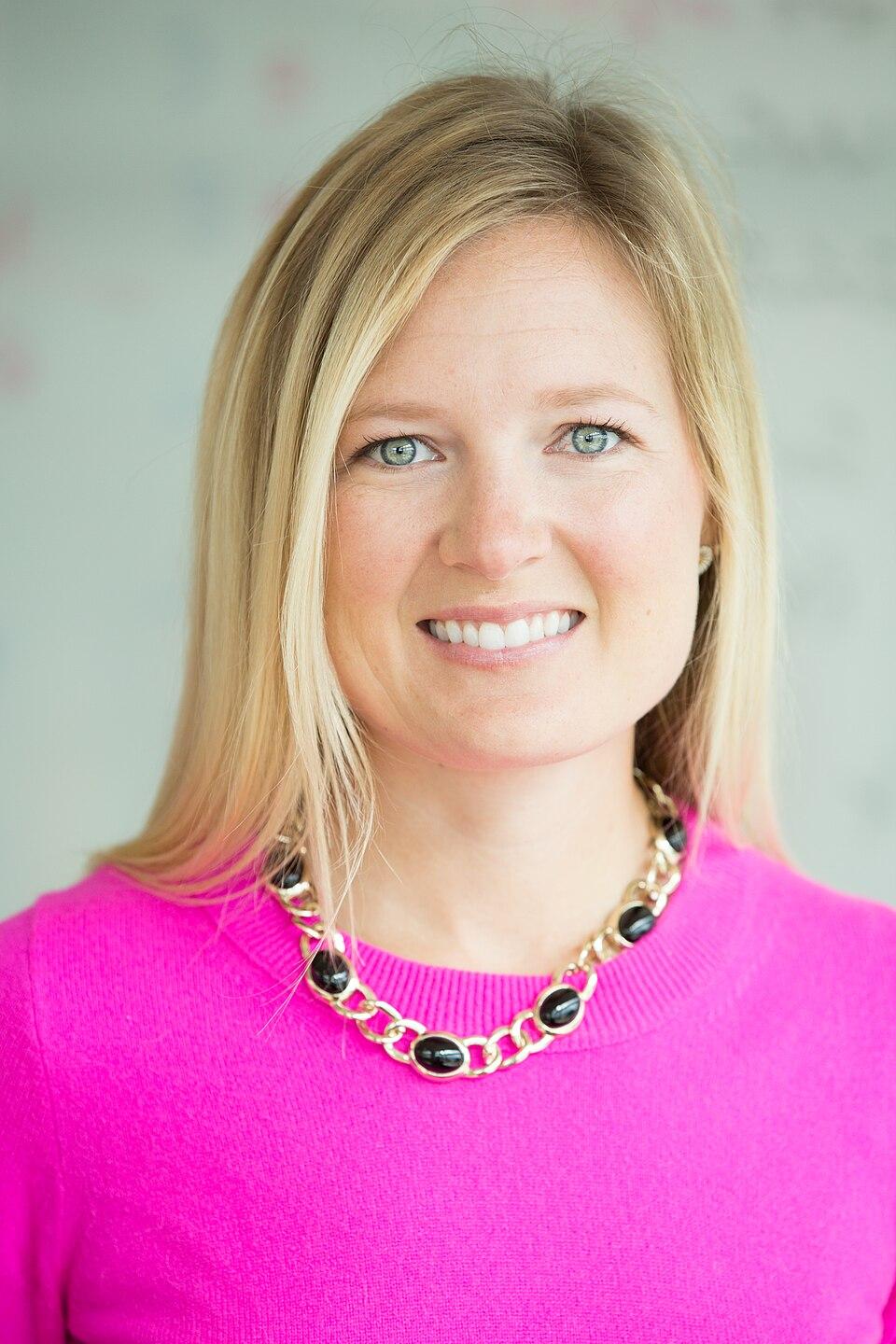
Designs fault-tolerant architectures for photonic quantum computers, developing ways to assemble small entangled resources and use connectivity efficiently while controlling the cost of error correction.

PsiQuantum

Vice President of Quantum Architecture

Read profile
Why included? 3 sources

Nickerson works on the architecture between physical photonic components and reliable computation. Fusion-based quantum computing makes small resource states and entangling measurements the building blocks of a larger machine. Her work with Daniel Litinski on active volume asks a complementary question: how can available nonlocal connections reduce the cost of logical operations? These are theoretical architecture contributions with explicit assumptions. They help define what hardware must deliver rather than establish that the full proposed computer has already been built.

Error correctionQuantum hardware

Documented work base: United States

Identification checked Explore the contributions and sources

O

1 person

Develops superconducting quantum hardware across materials, devices and control, studying both the interactions that make processors work and the environmental effects that limit their reliability.

Massachusetts Institute of Technology

Professor of Physics; Director, Center for Quantum Engineering

Read profile
Why included? 3 sources

Oliver’s research links device engineering with the physics of reliable superconducting qubits. His coauthored work on giant artificial atoms demonstrates ways to control coupling and preserve interactions through a shared waveguide. A separate radiation study identifies an environmental source of quasiparticles that can degrade coherence, showing why processor design must include its surroundings. Together these contributions address useful interactions and unwanted disturbances. His MIT leadership connects that research with the broader engineering required to build quantum systems.

Quantum hardwareControl & measurement

Documented work base: United States

Identification checked Explore the contributions and sources

P

3 people

Connects precision control of light and mechanical motion with superconducting quantum hardware, including the cat-qubit approach used by AWS to explore lower-overhead quantum error correction.

Caltech / Amazon Web Services

John G. Braun Professor of Applied Physics and Physics; Director of Quantum Hardware, AWS

Read profile
Why included? 3 sources

Painter’s contributions join the control of quantum physical systems with the engineering of a computing architecture. His group’s micromechanical experiment generated squeezed light on a silicon device, showing how designed structures can manipulate optical noise. More recently, his AWS hardware program demonstrated the Ocelot cat-qubit chip with error correction. The two results operate at different levels, device physics and encoded computation. Ocelot is an experimental building block toward larger systems, with substantial engineering still required for useful fault-tolerant computing.

Quantum hardwareError correction

Documented work base: United States

Identification checked Explore the contributions and sources

Preskill connects the theory of reliable quantum computation with a practical question: what can a noisy machine accomplish, and what would it take to protect a useful calculation?

California Institute of Technology

Richard P. Feynman Professor of Theoretical Physics

Read profile
Why included? 5 sources

Preskill’s work links methods for protecting quantum information with a framework for reading the field’s promises. With Daniel Gottesman and Alexei Kitaev, he introduced an oscillator encoding that protects against small displacement errors. His NISQ-era analysis examines opportunities and limitations before comprehensive error correction is available. Together, these contributions explain why physical-qubit counts alone cannot tell a reader whether a machine can perform a reliable calculation. His current Caltech curriculum vitae also lists a Senior Scientist role at Oratomic beginning in 2026, alongside his academic appointments. That concurrent affiliation provides context for reading company forecasts; the underlying research and its assumptions remain the evidence to examine.

FoundationsError correction

Documented work base: United States

Identification checked Explore the contributions and sources

Puri connects quantum-information theory with the noise a real device has, studying how control and error protection can work with that structure.

Yale University

Faculty member in Applied Physics, with an additional appointment in Physics

Read profile
Why included? 5 sources

Puri’s research asks how a device’s physical noise should shape the design of reliable computation. Her bias-preserving-gate work develops operations that retain an advantageous error structure during a calculation. Her coauthored Kerr-cat work connects that design question with experimental stabilization, gates and readout in superconducting oscillator systems. The Puri Group describes its focus as theoretical quantum information processing and quantum optics, with collaboration across experimental groups. That theory-to-device connection is useful for understanding why adding physical qubits alone is not a complete protection strategy: the code, operations, measurements and assumed noise all have to work together.

Error correctionQuantum hardware

Documented work base: United States

Identification checked Explore the contributions and sources

S

4 people

Develops neutral-atom quantum processors, with research spanning multi-qubit entanglement, quantum algorithms and measurements that preserve the information stored in neighboring atomic qubits.

University of Wisconsin–Madison

Johannes Rydberg Professor of Physics

Read profile
Why included? 3 sources

Saffman connects the physics of individually controlled atoms to the operations a programmable quantum computer needs. His publications address both entangling several qubits and measuring selected atoms while protecting other qubits. These are distinct engineering steps: preparing useful quantum states does not by itself provide the repeated measurements required for error correction. His inclusion reflects documented experimental contributions to that progression and an active neutral-atom research program at Wisconsin.

Quantum hardwareError correction

Documented work base: United States

Identification checked Explore the contributions and sources

Helped establish circuit quantum electrodynamics and co-developed the transmon, connecting superconducting qubits to microwave circuits that can control and protect quantum information.

Yale University

Sterling Professor of Applied Physics

Read profile
Why included? 2 sources

Schoelkopf helped turn superconducting electrical circuits into a platform for manipulating quantum information. Circuit quantum electrodynamics provides a way to couple artificial atoms to microwave photons, while the transmon design reduces a major source of qubit sensitivity. These contributions concern the physical building blocks of a processor, not just a single demonstration. His Yale research also connects those devices to quantum operations and error correction, linking foundational circuit design to the demands of computation.

Quantum hardwareError correction

Documented work base: United States

Identification checked Explore the contributions and sources

Showed that quantum algorithms can efficiently factor integers and compute discrete logarithms, and introduced a way to protect stored quantum information against decoherence.

Massachusetts Institute of Technology

Professor

Read profile
Why included? 3 sources

Shor changed both the motivation for quantum computing and the case that it could be made reliable. His factoring and discrete-logarithm algorithms supplied concrete computational tasks with striking quantum possibilities. His error-correction work then addressed the fragility of the quantum information those algorithms need. These are complementary contributions: one identifies a reason to build a quantum computer, and the other helps explain how imperfect physical components might support dependable quantum computation.

Algorithms & complexityError correction

Documented work base: United States

Identification checked Explore the contributions and sources

Builds the software and architecture needed to program quantum computers, with contributions to quantum development tools, algorithms and the coordination of hardware with error correction.

NVIDIA

Vice President of Applied Research for Quantum Computing

Read profile
Why included? 3 sources

Svore addresses the layers between a quantum algorithm and the machine that runs it. Her Microsoft research included software for representing and optimizing quantum circuits, and later work on programming infrastructure and fault-tolerant system design. She now leads applied quantum-computing research at NVIDIA. Her inclusion reflects this sustained work on usable quantum computing: languages, intermediate representations and resource-aware design make it possible to reason about programs before the required large machines exist.

Quantum softwareAlgorithms & complexity

Documented work base: United States

Identification checked Explore the contributions and sources
About these checks

Linked sources support selected statements in each profile. Research sources include papers and preprints. A source count is not a ranking or a quality score.

The identification check date relates to the recorded professional description. Individual sources have their own check dates. The fixed 2026 selection stays separate from later profile corrections.

THE EDITORIAL VIEW

Why these people.
Why this field.

Quantum computing is shaped by more than headline breakthroughs. Progress also depends on the people who establish its limits, make its systems more reliable and turn difficult ideas into tools others can use.

The QubitWire 100 recognizes contributions across that work. Each profile explains what is being recognized and connects the account to its supporting evidence.

View the permanent 2026 record