
Skip to content

2026 SELECTION

QubitWire 100

100 people recognized for contributions to quantum computing. Unranked and alphabetical by surname.

An unranked collection. Browse by surname or start with an idea.

Browse by topic
Explain these topics
Error correction
Methods that protect encoded quantum information by detecting and correcting certain errors.
Neutral atoms
A hardware approach that stores quantum information in electrically neutral atoms.
Quantum networks
Links that distribute quantum information or entanglement between locations.
Algorithms & complexity
How quantum calculations work and what resources they require.
Foundations
The concepts and physical principles that quantum information builds on.

The 2026 selection17 of 100 people

About foundations
Foundations
The concepts and physical principles that quantum information builds on.

Jump to surname

B

3 people

Bennett helped establish quantum information as a discipline, co-developing quantum key distribution and the teleportation protocol that turns shared entanglement into a communication resource.

IBM Research

IBM Fellow

Read profile
Why included? 2 sources

Bennett’s work recast information as something governed by physical law. The BB84 protocol with Gilles Brassard made quantum states part of a cryptographic procedure, while the teleportation paper with five collaborators showed how entanglement and classical communication can transfer an unknown quantum state. These are defining building blocks for quantum communication and information processing. His inclusion recognizes their conceptual and technical reach, while preserving the conditions that make them meaningful: teleportation needs classical information, and a cryptographic protocol’s security must be assessed together with its assumptions and implementation.

FoundationsQuantum networks

Documented work base: United States

Identification checked Explore the contributions and sources
Brandão studies the structure of quantum information, developing mathematical results on entanglement, correlations and when complex quantum states admit efficient classical descriptions or preparation.

Caltech / Amazon Web Services

Quantum-information theorist; Professor of Theoretical Physics at Caltech

Read profile
Why included? 3 sources

Brandão’s work asks what makes a many-body quantum state computationally difficult and which physical properties make it manageable. With Michał Horodecki, he related decaying correlations in one dimension to an entanglement area law and an efficient approximate classical description. With Michael Kastoryano, he studied conditions for preparing quantum thermal states efficiently. The value is a sharper boundary between difficult quantum behavior and states that can be represented or generated economically. These results guide simulation and algorithm design through explicit assumptions instead of treating every large quantum system as automatically useful for computation.

FoundationsAlgorithms & complexity
Identification checked Explore the contributions and sources
Brassard co-developed quantum key distribution and helped generalize quantum search into amplitude amplification and estimation, linking quantum information’s foundations to reusable algorithmic tools.

Université de Montréal

Professor of Computer Science

Read profile
Why included? 3 sources

Brassard’s contributions span how quantum information is protected and how it is processed. The BB84 protocol with Charles Bennett established a quantum approach to distributing secret keys. His work with Peter Høyer, Michele Mosca and Alain Tapp generalized the ideas behind quantum search into amplitude amplification and amplitude estimation. That combination makes him relevant to both the foundations and the algorithmic toolkit of quantum computing. The profile identifies the coauthored procedures and their resource advantages without assuming that a protocol automatically guarantees the security or performance of a particular implementation.

Algorithms & complexityQuantum networks

Documented work base: Canada

Identification checked Explore the contributions and sources

C

2 people

An experimentalist and theorist whose work spans early quantum computation with nuclear spins and algorithms that improve how quantum computers simulate physical systems.

Massachusetts Institute of Technology

Julius A. Stratton Professor in Electrical Engineering and Physics

Read profile
Why included? 3 sources

Chuang connects two demanding parts of quantum computing: controlling a physical experiment and determining what an ideal machine can calculate efficiently. His coauthored nuclear magnetic resonance experiment implemented a small instance of Shor’s algorithm. Later work with Guang Hao Low developed quantum signal processing for Hamiltonian simulation. Together these contributions give readers a route from early demonstrations to the algorithmic tools used to reason about more capable quantum processors.

Algorithms & complexityQuantum simulation

Documented work base: United States

Identification checked Explore the contributions and sources
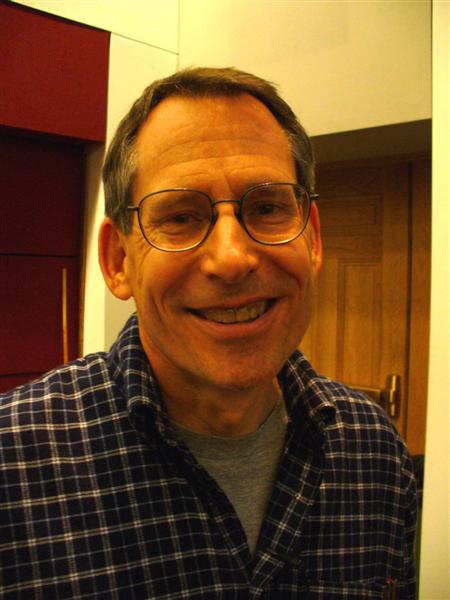
A quantum theorist whose proposals helped turn trapped ions into a computing architecture and entanglement purification into a strategy for long-distance quantum communication.

Max Planck Institute of Quantum Optics

Director, Theory Division

Read profile
Why included? 3 sources

Cirac’s contributions connect the abstract requirements of quantum information with specific physical systems. His trapped-ion proposal with Peter Zoller described how laser-controlled ions could perform quantum computation. His work with Briegel, Dür and Zoller then addressed the different challenge of preserving entanglement across long communication distances. Both examples show why architecture matters: a useful quantum device needs a method for combining imperfect physical operations into a larger, coordinated task.

FoundationsQuantum networks

Documented work base: Germany

Identification checked Explore the contributions and sources

D

2 people

A theoretical physicist who formulated a universal quantum-computing model and continues to investigate the physical foundations of information, computation and the possibilities of scientific explanation.

University of Oxford

Visiting Professor of Physics

Read profile
Why included? 3 sources

Deutsch’s work places computation inside physics. His 1985 paper described a quantum generalization of a universal computing machine, helping establish quantum computation as a distinct research program. His later work with Chiara Marletto examines information through the physical transformations that are possible or impossible. These contributions offer a conceptual foundation for understanding why quantum machines are different and why their capabilities must be stated in terms of explicit physical and mathematical assumptions.

FoundationsAlgorithms & complexity

Documented work base: United Kingdom

Identification checked Explore the contributions and sources

Set out practical criteria for quantum computing and co-proposed electron-spin qubits in quantum dots, connecting abstract computation to the requirements of physical devices.

Forschungszentrum Jülich (former institute director)

Quantum information theorist; former director of PGI-2

Read profile
Why included? 3 sources

DiVincenzo connects two questions that every hardware program must answer: what must a quantum computer be able to do, and which physical system can do it? His implementation criteria provide a vocabulary for assessing qubit preparation, control, coherence and measurement. With Daniel Loss he proposed a concrete semiconductor-spin architecture. Together, these contributions link general requirements to an enduring experimental direction. The profile credits the shared proposal jointly and separates that scientific legacy from institutional responsibilities that have since changed.

FoundationsQuantum hardware
Identification checked Explore the contributions and sources

E

1 person

A quantum-information physicist whose entanglement-based cryptography proposal connected secure communication with Bell’s theorem, alongside institution-building work at Singapore’s Centre for Quantum Technologies.

University of Oxford

Professor of Quantum Physics

Read profile
Why included? 3 sources

Ekert’s work helped make entanglement useful as a resource for communication. His 1991 proposal linked quantum key distribution to Bell’s theorem, giving a new way to reason about the security of shared keys. His role as founding director of the Centre for Quantum Technologies also contributed to the field’s research capacity. The combination illustrates how a foundational idea can shape a technical discipline and the institutions that support its development.

Quantum cryptographyFoundations

Documented work base: United Kingdom

Identification checked Explore the contributions and sources

G

3 people

Gottesman develops ways to protect quantum information, giving researchers a mathematical language for diagnosing errors while preserving the information a calculation needs.

University of Maryland

Brin Family Endowed Professor in Theoretical Computer Science and Co-Director of QuICS

Read profile
Why included? 4 sources

Quantum information cannot be protected by treating an unknown quantum state as an ordinary file to copy. Gottesman’s stabilizer formalism instead supplies a structured language for describing encoded information and the checks used to diagnose errors. His work with Alexei Kitaev and John Preskill on oscillator encoding connects continuous physical systems with discrete logical information. These contributions make the relationship between a code, the operations it supports and its resource cost easier to reason about across hardware platforms. The current QuICS profile identifies him as its co-director and the Brin Family Endowed Professor in Theoretical Computer Science at the University of Maryland, with an appointment in the Institute for Advanced Computer Studies.

Error correctionFoundations

Documented work base: United States

Identification checked Explore the contributions and sources
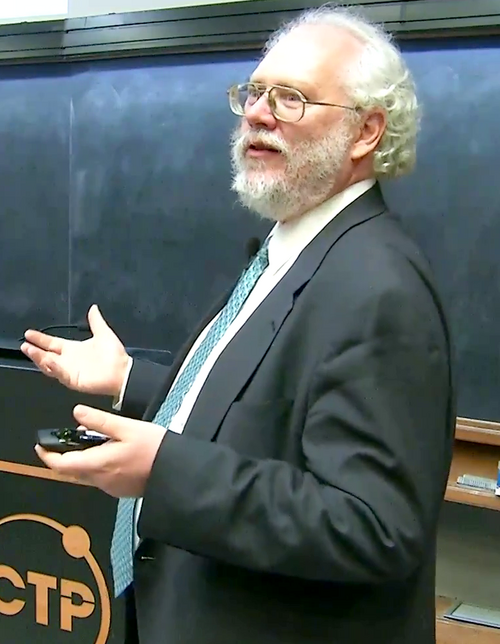
Introduced quantum search and generalized its underlying amplification technique, showing how a quantum computer can find a marked answer with quadratically fewer oracle queries.

Bell Labs (research at publication)

Quantum algorithms researcher; inventor of quantum search

Read profile
Why included? 2 sources

Grover belongs in an account of quantum computing because his search algorithm is a concrete, mathematically defined example of a quantum speedup. Its importance lies in a general search primitive rather than a particular machine or corporate program. His later work broadened the transformations that can support quantum search, making the idea more flexible. This profile distinguishes the proved query advantage from the engineering work needed to obtain a practical speedup: loading data, building an oracle and correcting hardware errors remain separate costs.

Algorithms & complexityFoundations
Identification checked Explore the contributions and sources

A quantum-information physicist whose work spans the foundations of quantum-state manipulation and collaborative experiments in long-lived optical storage for quantum communication.

University of Science and Technology of China

Quantum-information physicist

Read profile
Why included? 2 sources

Guo’s contributions connect theoretical questions about quantum states with experimental components for communication. His work with Luming Duan explored probabilistic cloning under specified conditions, while later coauthored research demonstrated hour-scale coherent optical storage in a solid-state memory. These are different kinds of progress: one clarifies what quantum mechanics permits, and the other improves a physical resource that communication schemes may require. Neither should be confused with unrestricted cloning or an already deployed global quantum network.

Quantum networksQuantum hardware

Documented work base: China

Identification checked Explore the contributions and sources

H

1 person

Harrow develops mathematical tools for quantum computation, from the HHL linear-systems algorithm to a resource framework connecting communication, entanglement and quantum information protocols.

Massachusetts Institute of Technology

Professor of Physics, MIT

Read profile
Why included? 3 sources

Harrow connects the search for useful quantum algorithms with rigorous accounts of the resources they consume. With Hassidim and Lloyd, he showed how a quantum computer could estimate properties of certain linear-system solutions under explicit input and conditioning assumptions. With Devetak and Winter, he developed a language for combining quantum communication protocols. These contributions make him a useful guide to both the potential of quantum processing and the conditions that an advantage claim must satisfy.

Algorithms & complexityFoundations

Documented work base: United States

Identification checked Explore the contributions and sources

L

1 person

Laflamme helped establish the theory of quantum error correction, a route to computing with linear optics, and Waterloo’s Institute for Quantum Computing. He died in 2025.

University of Waterloo

Quantum-information physicist; founding executive director of the Institute for Quantum Computing (historical)

Read profile
Why included? 3 sources

Laflamme’s enduring contribution combines mathematical foundations with institution building. His work with Emanuel Knill formalized conditions for recovering encoded quantum information after noise. With Knill and Gerard Milburn, he also developed a route to quantum computation using linear optics, photon detection and feedback. At Waterloo he served as the founding executive director of the Institute for Quantum Computing. This historical profile recognizes that continuing scientific legacy while explicitly recording his death in June 2025.

Error correctionFoundations

Documented work base: Canada

Identification checked Explore the contributions and sources

P

1 person

Preskill connects the theory of reliable quantum computation with a practical question: what can a noisy machine accomplish, and what would it take to protect a useful calculation?

California Institute of Technology

Richard P. Feynman Professor of Theoretical Physics

Read profile
Why included? 5 sources

Preskill’s work links methods for protecting quantum information with a framework for reading the field’s promises. With Daniel Gottesman and Alexei Kitaev, he introduced an oscillator encoding that protects against small displacement errors. His NISQ-era analysis examines opportunities and limitations before comprehensive error correction is available. Together, these contributions explain why physical-qubit counts alone cannot tell a reader whether a machine can perform a reliable calculation. His current Caltech curriculum vitae also lists a Senior Scientist role at Oratomic beginning in 2026, alongside his academic appointments. That concurrent affiliation provides context for reading company forecasts; the underlying research and its assumptions remain the evidence to examine.

FoundationsError correction

Documented work base: United States

Identification checked Explore the contributions and sources

S

1 person

Showed that quantum algorithms can efficiently factor integers and compute discrete logarithms, and introduced a way to protect stored quantum information against decoherence.

Massachusetts Institute of Technology

Professor

Read profile
Why included? 3 sources

Shor changed both the motivation for quantum computing and the case that it could be made reliable. His factoring and discrete-logarithm algorithms supplied concrete computational tasks with striking quantum possibilities. His error-correction work then addressed the fragility of the quantum information those algorithms need. These are complementary contributions: one identifies a reason to build a quantum computer, and the other helps explain how imperfect physical components might support dependable quantum computation.

Algorithms & complexityError correction

Documented work base: United States

Identification checked Explore the contributions and sources

T

1 person

Studies how quantum information can survive noise, combining rigorous limits on quantum memories with error-correction theory and research connected to physical qubit architectures.

QuTech, Delft University of Technology

Group leader

Read profile
Why included? 3 sources

Terhal’s work asks which kinds of protection quantum information can actually obtain from a physical system. A rigorous limitation on passive stabilizer-code memories clarifies what some architectures cannot provide automatically. Her broader work on quantum error correction explains the active codes, thresholds and decoding strategies used to pursue reliable storage and computation. This combination of constructive theory and carefully stated limits makes her research valuable for judging hardware proposals without confusing a promising design with proven resilience.

Error correctionFoundations

Documented work base: Netherlands

Identification checked Explore the contributions and sources

V

1 person

Develops the theoretical foundations used to compare quantum and classical computation, including quantum complexity theory and analyses of the difficulty of sampling quantum circuits.

University of California, Berkeley

Roger A. Strauch Professor of EECS; co-director, Berkeley Quantum Computation Center

Read profile
Why included? 3 sources

Vazirani helps establish what a claimed quantum advantage means mathematically. Quantum complexity theory supplies a framework for comparing computational models, and his later work examines the difficulty of reproducing the output of randomly chosen quantum circuits. These contributions matter because experimental performance alone does not explain whether a task is classically difficult. His profile emphasizes the theoretical evidence and its assumptions, keeping complexity results separate from the engineering performance or commercial usefulness of a device.

Algorithms & complexityFoundations

Documented work base: United States

Identification checked Explore the contributions and sources
About these checks

Linked sources support selected statements in each profile. Research sources include papers and preprints. A source count is not a ranking or a quality score.

The identification check date relates to the recorded professional description. Individual sources have their own check dates. The fixed 2026 selection stays separate from later profile corrections.

THE EDITORIAL VIEW

Why these people.
Why this field.

Quantum computing is shaped by more than headline breakthroughs. Progress also depends on the people who establish its limits, make its systems more reliable and turn difficult ideas into tools others can use.

The QubitWire 100 recognizes contributions across that work. Each profile explains what is being recognized and connects the account to its supporting evidence.

View the permanent 2026 record