
Skip to content

2026 SELECTION

QubitWire 100

100 people recognized for contributions to quantum computing. Unranked and alphabetical by surname.

An unranked collection. Browse by surname or start with an idea.

Browse by topic
Explain these topics
Error correction
Methods that protect encoded quantum information by detecting and correcting certain errors.
Neutral atoms
A hardware approach that stores quantum information in electrically neutral atoms.
Quantum networks
Links that distribute quantum information or entanglement between locations.
Algorithms & complexity
How quantum calculations work and what resources they require.
Foundations
The concepts and physical principles that quantum information builds on.

The 2026 selection10 of 100 people

About foundations
Foundations
The concepts and physical principles that quantum information builds on.

Jump to surname

A

1 person

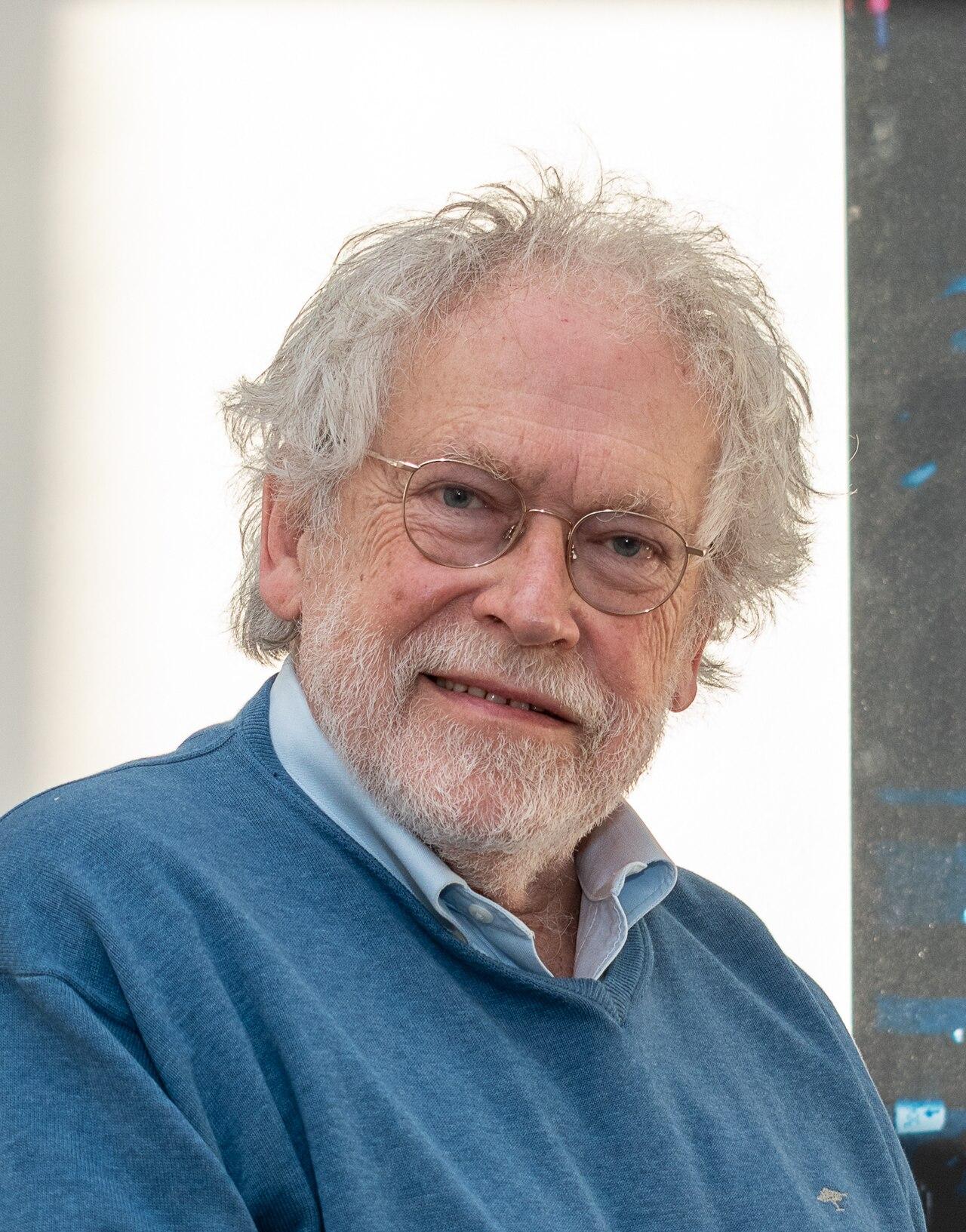
Alain Aspect and his colleagues switched how they measured pairs of photons while the light was still in flight. Their experiment sharpened an existing test of quantum entanglement.

Institut d’Optique Graduate School / CNRS

Professor, Augustin Fresnel Chair; emeritus CNRS research director

Read profile
Why included? 4 sources

In 1972, Stuart Freedman and John Clauser measured correlations between pairs of photons that violated a Bell inequality. Their measurement settings stayed fixed during each run. A decade later, Aspect, Jean Dalibard and Gérard Roger switched the settings while the photons were travelling. The correlations still exceeded the bound predicted by local hidden-variable models under the assumptions of the test. Later experiments by Aspect’s team used individual photons to study interference and ultracold atoms to see how disorder can stop matter waves from spreading.

FoundationsQuantum simulation

Documented work base: France

Identification checked Explore the contributions and sources
E

1 person

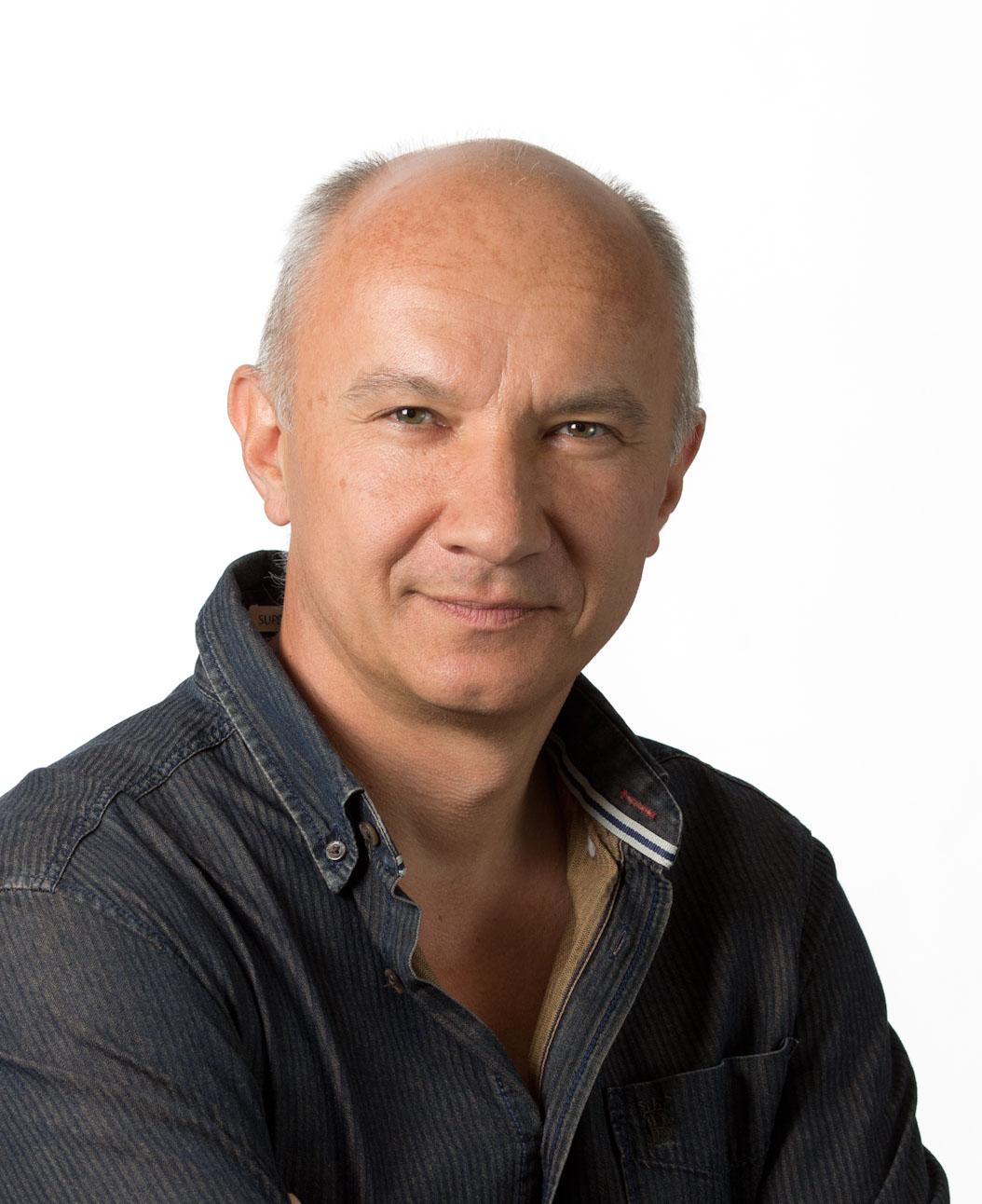
A quantum-information physicist whose entanglement-based cryptography proposal connected secure communication with Bell’s theorem, alongside institution-building work at Singapore’s Centre for Quantum Technologies.

University of Oxford

Professor of Quantum Physics

Read profile
Why included? 3 sources

Ekert’s work helped make entanglement useful as a resource for communication. His 1991 proposal linked quantum key distribution to Bell’s theorem, giving a new way to reason about the security of shared keys. His role as founding director of the Centre for Quantum Technologies also contributed to the field’s research capacity. The combination illustrates how a foundational idea can shape a technical discipline and the institutions that support its development.

Quantum cryptographyFoundations

Documented work base: United Kingdom

Identification checked Explore the contributions and sources
F

1 person

An experimental quantum-optics researcher whose collaborative work spans continuous-variable teleportation and large optical cluster states, advancing routes to information processing with light.

RIKEN

Team Director, Optical Quantum Computing Research Team

Read profile
Why included? 2 sources

Furusawa’s research explores how light can carry and process quantum information. His coauthored teleportation experiment demonstrated a central communication primitive for continuous-variable optical systems. Later work generated a two-dimensional cluster state using light arranged across time bins. These contributions connect individual quantum operations with the structured entanglement needed for a broader computing architecture, making his work a useful entry point into the possibilities and engineering challenges of photonic computation.

FoundationsQuantum networks

Documented work base: Japan

Identification checked Explore the contributions and sources

G

2 people

A physicist whose work connects quantum foundations, optical communication and commercial quantum security, including research synthesis and the cofounding of ID Quantique.

University of Geneva

Professor Emeritus of Physics

Read profile
Why included? 3 sources

Gisin’s career connects optical-fiber engineering with questions about quantum correlations and secure communication. His Geneva group pursued quantum cryptography and long-distance entanglement, and he coauthored a substantial review that brought theoretical and experimental aspects of quantum cryptography together. He also cofounded ID Quantique. The combination makes his contribution relevant to readers exploring how a quantum-information idea moves between foundational research, laboratory systems and a commercial security product.

Quantum cryptographyQuantum networks
Identification checked Explore the contributions and sources

A quantum-information physicist whose work spans the foundations of quantum-state manipulation and collaborative experiments in long-lived optical storage for quantum communication.

University of Science and Technology of China

Quantum-information physicist

Read profile
Why included? 2 sources

Guo’s contributions connect theoretical questions about quantum states with experimental components for communication. His work with Luming Duan explored probabilistic cloning under specified conditions, while later coauthored research demonstrated hour-scale coherent optical storage in a solid-state memory. These are different kinds of progress: one clarifies what quantum mechanics permits, and the other improves a physical resource that communication schemes may require. Neither should be confused with unrestricted cloning or an already deployed global quantum network.

Quantum networksQuantum hardware

Documented work base: China

Identification checked Explore the contributions and sources

H

1 person

An experimental physicist whose diamond-spin research connects tests of quantum nonlocality with the construction of small networks that distribute and process entanglement.

Delft University of Technology; QuTech

Distinguished Professor at Delft University of Technology and Principal Investigator at QuTech

Read profile
Why included? 2 sources

Hanson’s work links fundamental physics with the building blocks of a quantum internet. He coauthored the Delft experiment that tested a Bell inequality while closing major experimental loopholes. His group subsequently demonstrated entanglement across a network with multiple quantum nodes. Both depend on controlling matter-based qubits and connecting them optically, making this research a useful guide to the demanding transition from individual quantum links to coordinated network operations.

Quantum networksFoundations

Documented work base: Netherlands

Identification checked Explore the contributions and sources

L

1 person

Laflamme helped establish the theory of quantum error correction, a route to computing with linear optics, and Waterloo’s Institute for Quantum Computing. He died in 2025.

University of Waterloo

Quantum-information physicist; founding executive director of the Institute for Quantum Computing (historical)

Read profile
Why included? 3 sources

Laflamme’s enduring contribution combines mathematical foundations with institution building. His work with Emanuel Knill formalized conditions for recovering encoded quantum information after noise. With Knill and Gerard Milburn, he also developed a route to quantum computation using linear optics, photon detection and feedback. At Waterloo he served as the founding executive director of the Institute for Quantum Computing. This historical profile recognizes that continuing scientific legacy while explicitly recording his death in June 2025.

Error correctionFoundations

Documented work base: Canada

Identification checked Explore the contributions and sources

W

2 people

Combines research in continuous-variable quantum information with the creation of Xanadu, a company developing quantum computers and software around photonic approaches to quantum technology.

Xanadu

Founder and Chief Executive Officer

Read profile
Why included? 3 sources

Weedbrook connects the theoretical language of continuous-variable quantum information to an industrial photonic-computing effort. His co-authored review organized Gaussian states, operations and measurements across quantum communication and computation. His founding of Xanadu then created an organization working on photonic quantum technology. The contribution is both scientific and institutional, but the two are evaluated separately: a review establishes a documented research contribution, while company leadership establishes responsibility for a continuing development program.

FoundationsQuantum hardware
Identification checked Explore the contributions and sources

Develops photonic quantum technology and methods for characterizing quantum states, including collaborative work on an optical controlled-NOT gate and reliable reconstruction of two-qubit states.

University of Queensland

Professor of Physics

Read profile
Why included? 3 sources

White’s research links making a quantum operation work with establishing what the experiment actually produced. An optical controlled-NOT gate demonstrates interactions between photon-encoded qubits, while quantum-state tomography provides methods to reconstruct and assess the resulting states. Those contributions are complementary: an experimental device needs trustworthy characterization as well as control. His current Queensland research continues that focus on photonic technology and entanglement, with the early demonstrations credited to their collaborating teams.

Quantum hardwareControl & measurement

Documented work base: Australia

Identification checked Explore the contributions and sources

Z

1 person

Advanced the foundations and experimental control of photon entanglement, including multipartite quantum states and entanglement swapping between photons that had never interacted directly.

IQOQI Vienna, Austrian Academy of Sciences

Group leader

Read profile
Why included? 3 sources

Zeilinger helped make entanglement an experimentally usable resource as well as a test of quantum foundations. His work ranges from the theoretical structure of multipartite correlations to laboratory protocols that connect initially separate entangled pairs. These contributions matter for quantum information because a network must create and distribute correlations, not merely send ordinary signals. His inclusion reflects that foundational and experimental record, with the GHZ framework and entanglement-swapping experiment attributed to their collaborators.

FoundationsQuantum networks

Documented work base: Austria

Identification checked Explore the contributions and sources
About these checks

Linked sources support selected statements in each profile. Research sources include papers and preprints. A source count is not a ranking or a quality score.

The identification check date relates to the recorded professional description. Individual sources have their own check dates. The fixed 2026 selection stays separate from later profile corrections.

THE EDITORIAL VIEW

Why these people.
Why this field.

Quantum computing is shaped by more than headline breakthroughs. Progress also depends on the people who establish its limits, make its systems more reliable and turn difficult ideas into tools others can use.

The QubitWire 100 recognizes contributions across that work. Each profile explains what is being recognized and connects the account to its supporting evidence.

View the permanent 2026 record