
The qubit that kept changing its tune
What happens when the same microwave pulse gives a qubit a different nudge than it did a moment ago? A single measurement helped researchers find the right frequency again. Also in this edition, an ordinary computer takes on a quantum magnet, a theory explains a peculiar twist in two sheets of electrons, and an ion-trap maker builds a path between chips.
Published · Los Angeles · 4 selected stories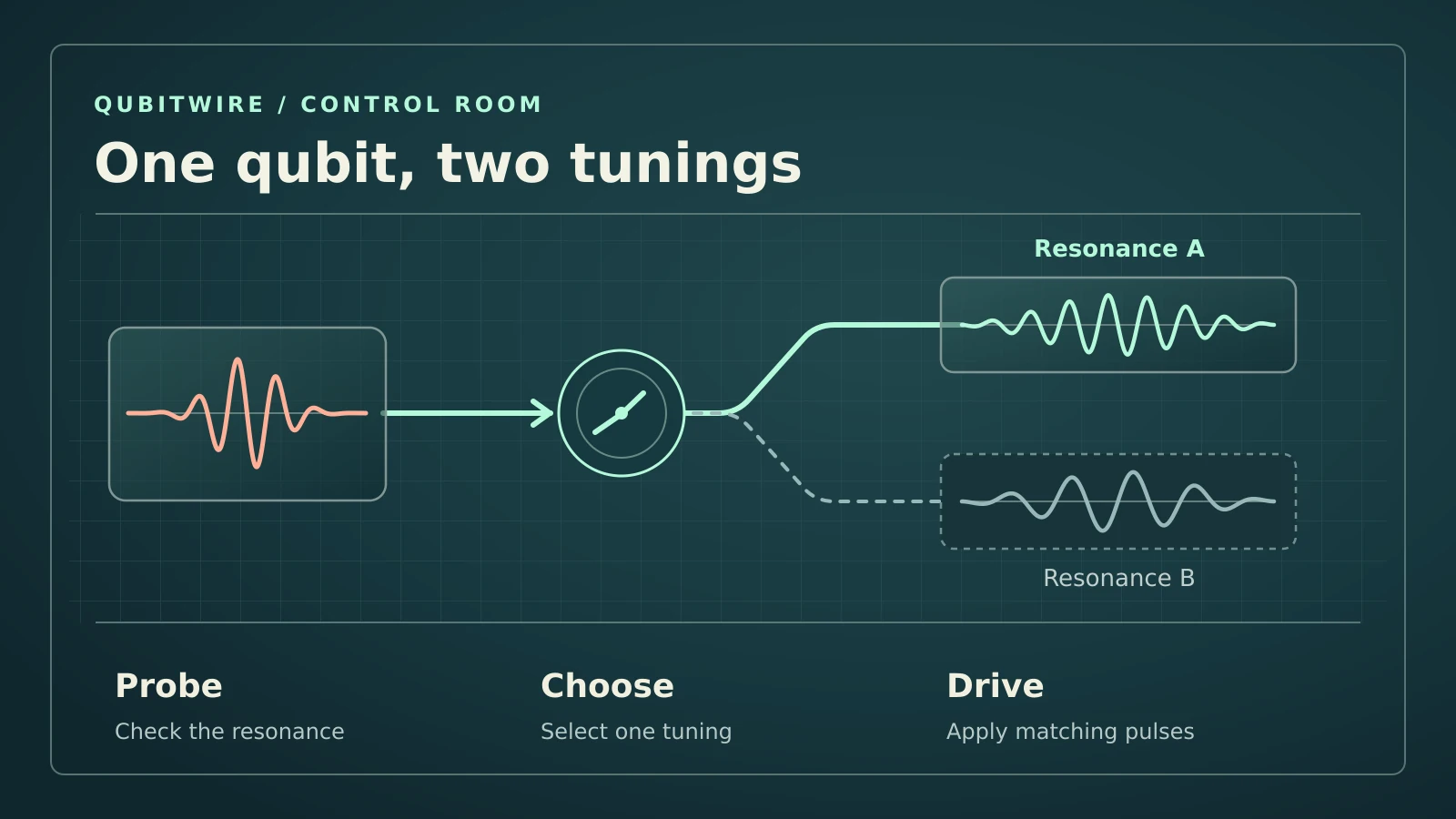
One extra measurement cut this qubit’s average gate error in half
A superconducting qubit kept switching between two resonances. The team checked which frequency was active before sending the next set of pulses. The average gate error fell from 0.14% to 0.065%.
Single-qubit experiment. The comparison covers roughly 14 minutes of testing. A measurement costs time and can go stale if the device switches frequency again.
University of Regensburg · November 3 research announcement ↗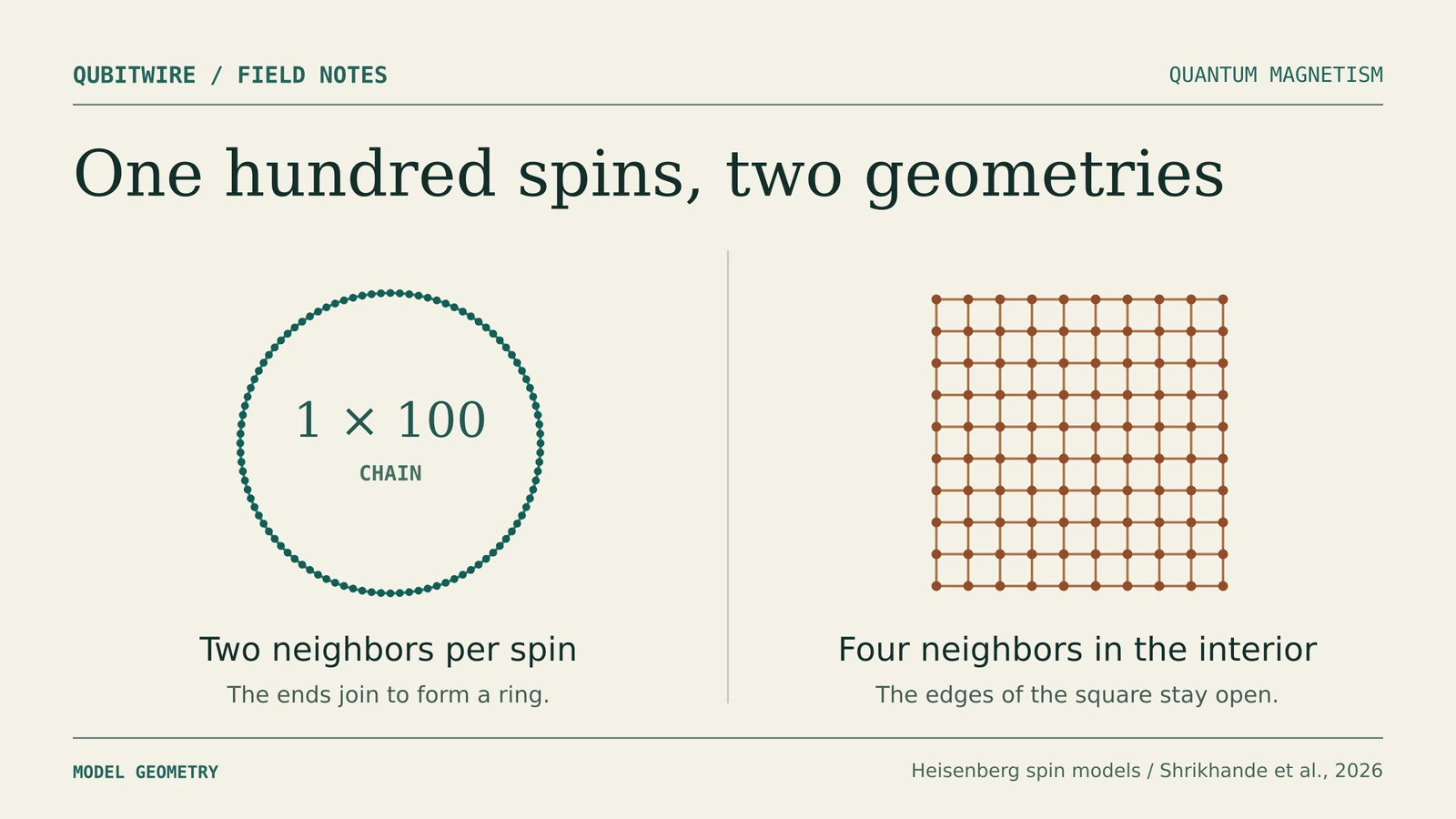
A tool for checking quantum chips found a new use in magnetism
What is the lowest energy a grid of 100 interacting spins can have? A calculation on one CPU thread got within 0.158% of the reference estimate in 2.5 minutes.
Classical simulation. Both the grid and the reference were calculated on conventional computers. Greater precision took longer.
Shrikhande and colleagues · PRX Quantum, November 2 ↗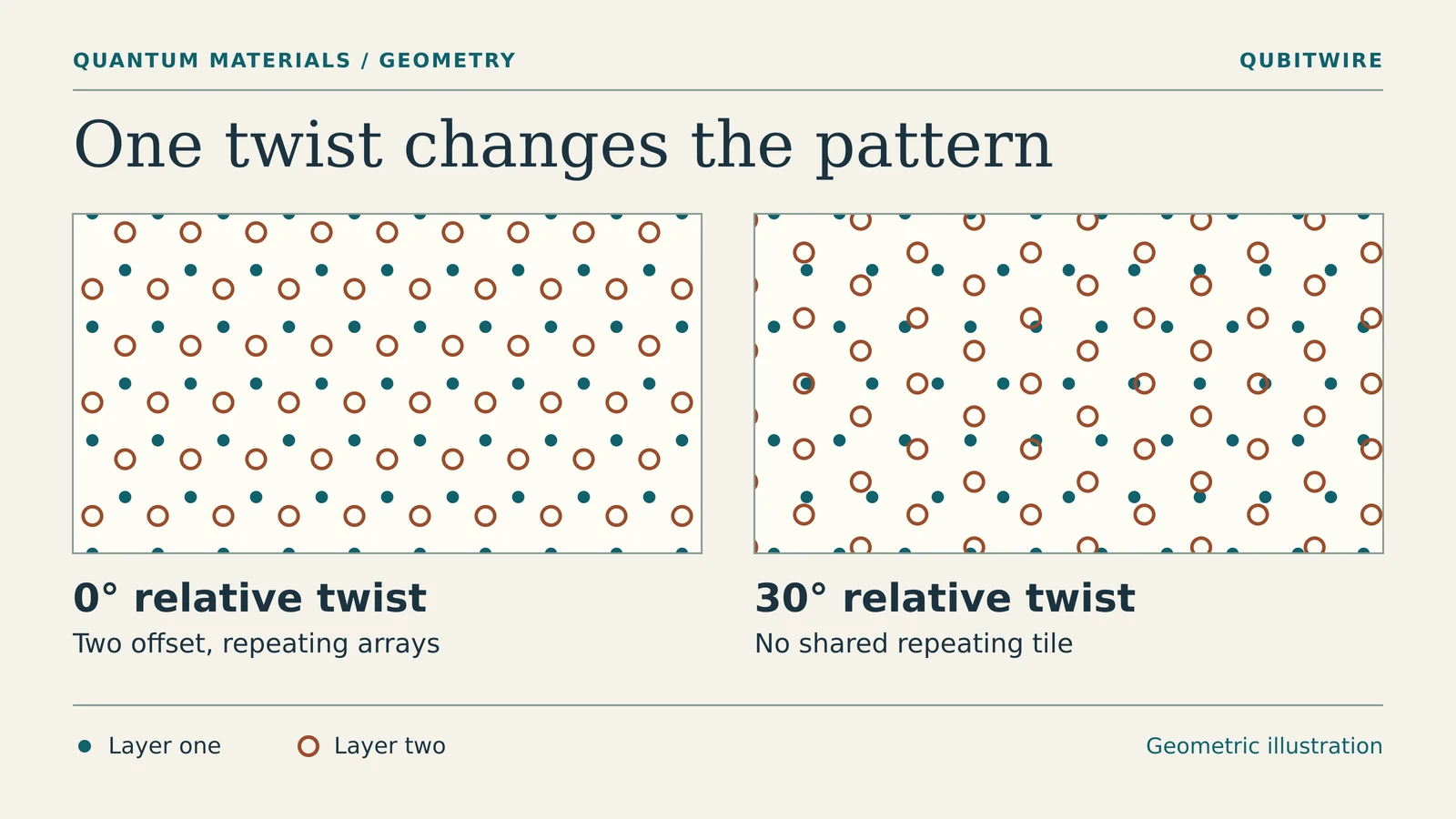
A theory predicts an electron pattern that never repeats
Put two triangular arrays of electrons on top of each other and twist one by 30 degrees. Each layer repeats. Slide both together and no single step brings the combined pattern back onto itself. The authors explain why the motion electrons retain at absolute zero can favor that angle.
Theory accepted November 2. Earlier simulations suggested this arrangement. The new calculation explains its stability under the model’s assumptions. An experimental observation would be a separate result.
Graham, Gaggioli and Fu · Physical Review Letters acceptance ↗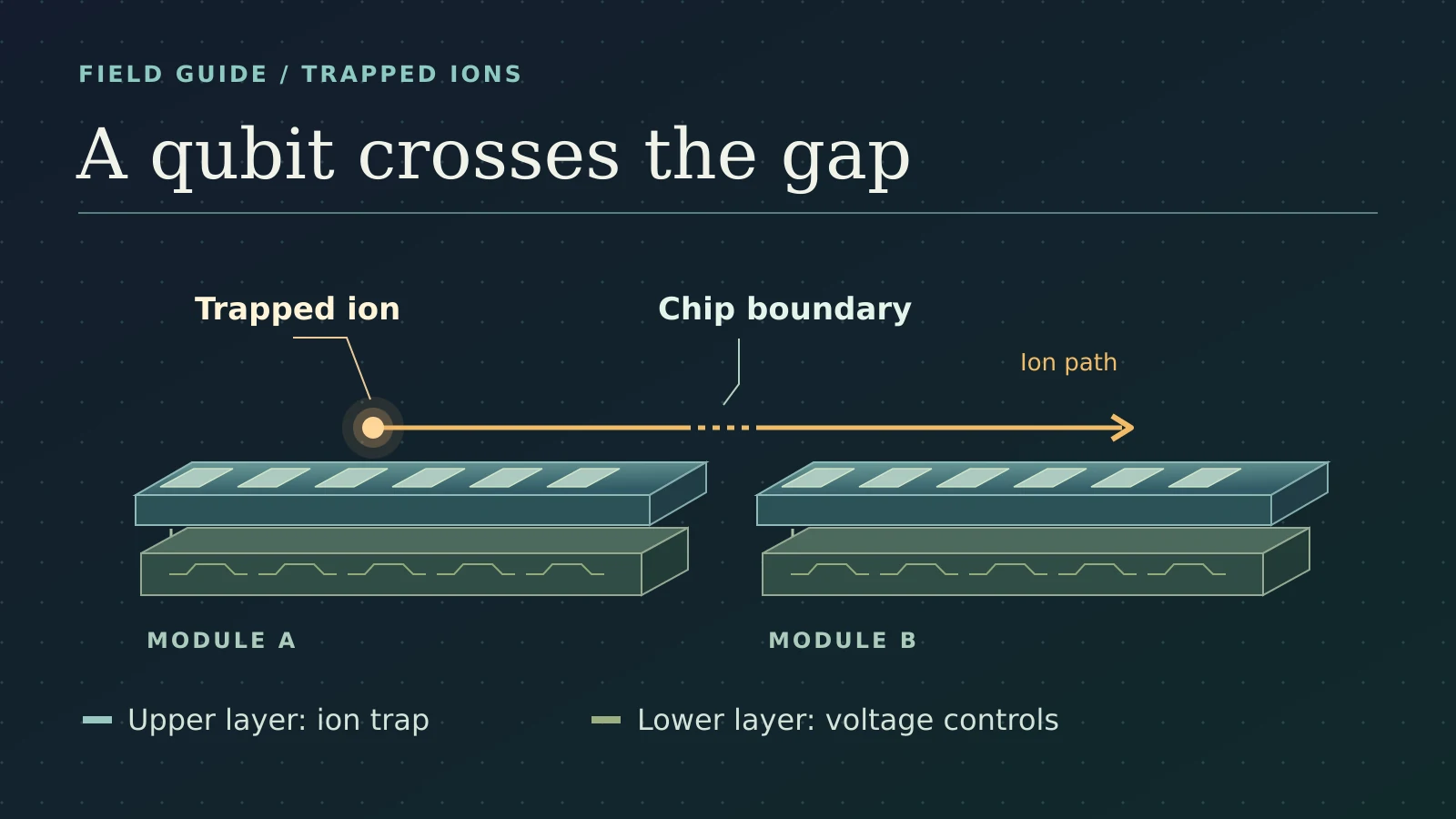
Universal Quantum unveils a chip built to pass an atom to its neighbor
If an ion carries information, moving the ion can carry that information into the next chip. Universal Quantum says its new module combines the trap, local voltage controls and the connection to a neighboring module.
Company announcement, November 3. The German Aerospace Center sets a four-module goal for its Legato project. The project description lays out the tests that the customer intends to run.
German Aerospace Center · Legato project goals ↗What would you look for in the next test?
Try the frequency check on several qubits at once. Test the classical algorithm on a different magnet at the same target accuracy. Look for the predicted twist in a real material. For the chip, look for a customer test that moves an ion between modules and then uses it in a computation.
Compare the recorded evidence →Follow the evidence further.
Move from the research to the physical mechanism, then work through the tradeoff yourself.
A useful way to read this page
Choose a route according to the question you want it to answer.
Reader guideBriefing: read a dated edition and a live preview for different purposesUse a fixed edition for its original selection, the archive for history and the preview for its currently displayed status.
A dated briefing preserves an editorial selection for that edition. Its linked articles can acquire corrections or additional context later, so the edition date and an article’s update date answer different questions. Use the archive to revisit what was selected at a particular time and the live preview to inspect the current selection.
When comparing editions, look for a changed claim or new evidence rather than assuming every repeated organization has produced a new technical result. Record the source date, the reported event date and the reason the item matters together. This makes a useful chronology without treating a new publication date as a new experiment.
The archive, preview and feed routes provide different ways to read the publication. A visible edition or feed is not a promise of email delivery, an individual alert or a fixed future publishing schedule. Check each route’s own description when choosing how to return.
Questions to take with you
Why can a linked article change while the edition stays dated?
The edition preserves its original selection. The article can carry later corrections or context. Reading both dates prevents those two records from being confused.
Does reading or bookmarking an edition join email delivery?
No such action is described here. Email signup and status have their own existing route and choices; this module does not submit or confirm a subscription.
Sources and their boundaries (1)
- Current on-site edition: What changes when the key on your desk goes post-quantum? ↗QubitWire · Published 2026-11-03
4 stories in this dated edition. Older editions remain in the archive; the live preview is a separate, changing selection.
On-site publication does not establish email delivery. The signup is a launch list while scheduled email delivery remains inactive.