Research2 min read
An analytical model examines when dissipative charging produces extractable work, with frequency detuning and interaction strength shaping the result.
Research2 min read
A model inspired by bacterial light harvesting reaches journal publication, with separate optima for power and extractable work.
Research2 min read
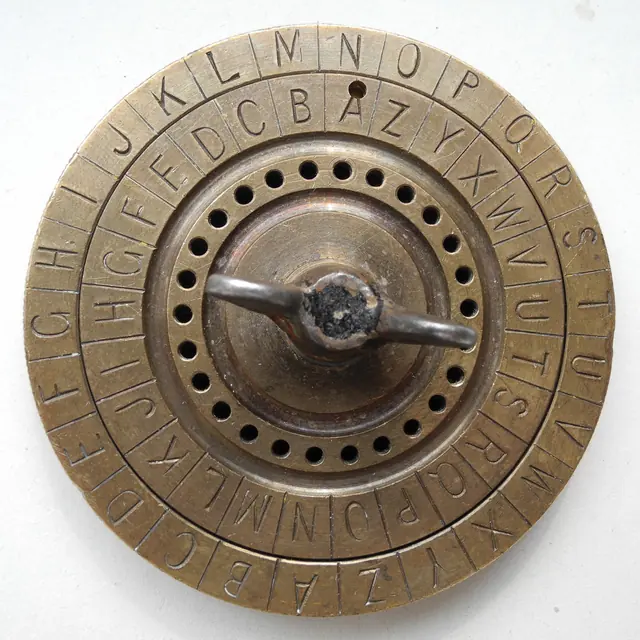
A historical-cipher study examines the acceptance rule inside Grover search. Its projected advantage is over random search, with no modern encryption break.
Research2 min read
Laboratory spectra and atomic calculations examine a two-photon ytterbium Rydberg transition. Clocks, electrometers and radiation thermometers remain potential applications.
Research2 min read
Researchers report an optical demonstration of the strong Mpemba effect. The result concerns controlled quantum states approaching equilibrium.
Research3 min read
The experiment separates state preparation from a gate acting on unknown inputs.
Research3 min read
A modeling study keeps orbit, ground equipment and finite data in the same account.
Research3 min read
A proposed arrangement uses distributed coupling points to shape emission. The reported transfer fidelities come from models rather than a built link.
Research3 min read
A PRX Quantum method reconstructs larger processes when a specific correlation condition holds. Its 50-qubit examples are numerical studies.
Research3 min read
The experiment improves loading and storage in one apparatus. The atom count and the different cooling tests should not be confused with a processor performance claim.
Research3 min read
A new journal paper gives strong-coupling thermodynamics a system-focused description. Its permitted starting conditions and measurement demands remain essential.
Research3 min read
An October preprint reports lower estimated gate and qubit costs on selected tasks. Its checking process, sampling limits and baseline assumptions are central to interpreting the result.
Research4 min read
The published experiment achieves full optical contrast. Its sub-400-femtotesla figure is a photon-shot-noise limit, with technical noise still separating that limit from a practical instrument.
Research3 min read
Researchers tested four-dimensional encoding in installed fibre in Concepción. The physical links and a separate detector benchmark answer different questions.
Research2 min read
A theoretical strategy uses earlier estimates to choose later controls and measurement times. The proposal tackles several unknown parameters together.
Research2 min read
Columbia’s account of Pd5AlI2 research highlights interference around atomic defects. Deliberately placing those defects remains an engineering step ahead.
Research2 min read
A surface-code experiment studies when encoded information survives imperfect teleportation. Both code patches sit on the same superconducting processor.
Research2 min read
Gao and colleagues report 6.8-nanosecond single-qubit gates with tightly controlled leakage. The result belongs to a calibrated transmon, not an entire processor.
Research2 min read
An autonomous correction experiment has reached Nature Physics. Its memory result depends on the protected state, noise and baseline being compared.
Research2 min read
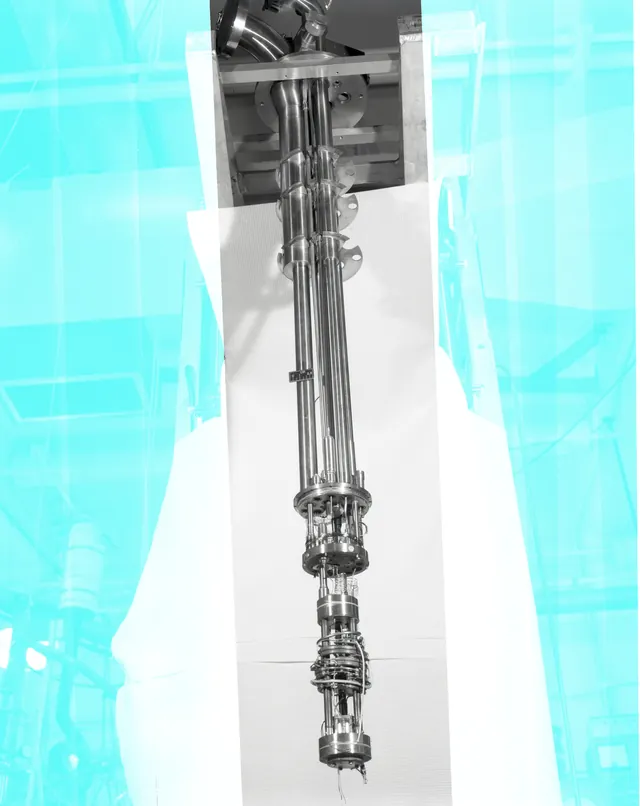
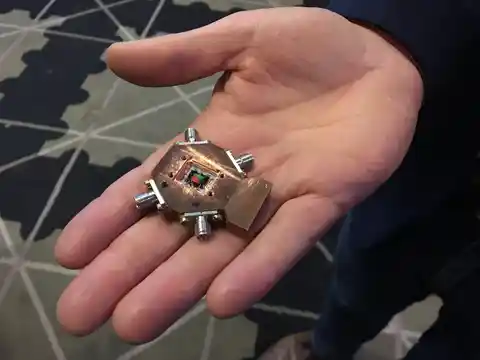
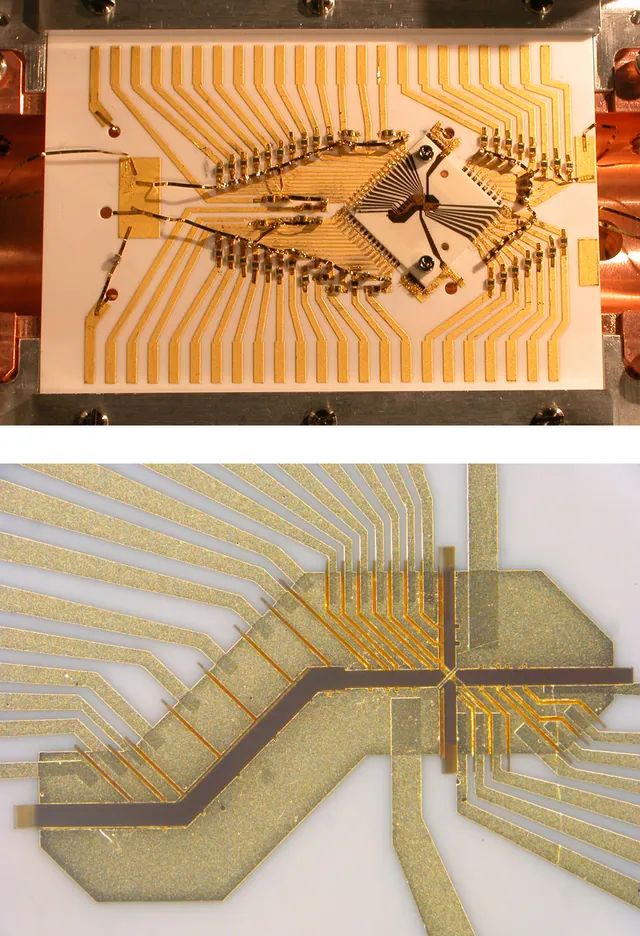
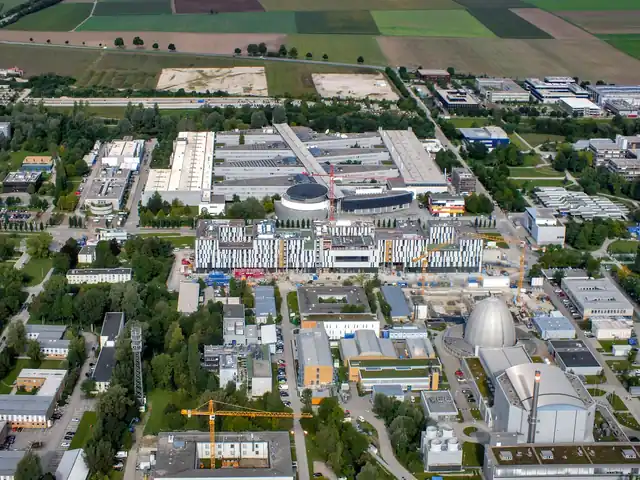
The Garching centre opened in October. Its significance lies in the research it can connect and the capabilities it can support.
Research2 min read
Classiq’s Fault Tolerance Engine translates logical circuits into surface-code plans. The estimates depend on the hardware and error assumptions supplied.
Research2 min read
A PRX Quantum paper develops algorithms for building boundaries in topological stabilizer codes. It is a mathematical route toward finite layouts, with hardware validation still ahead.
Research2 min read
A reported tenfold GPU gain applies to sampling simulated errors. Decoding and the rest of the workflow still determine the total runtime.
Research2 min read
An October 14 study models nonradiative energy loss in diamond and silicon-carbide defects. Better calculations can clarify the physics without claiming a new device or quantum-computing speed record.