Research2 min read
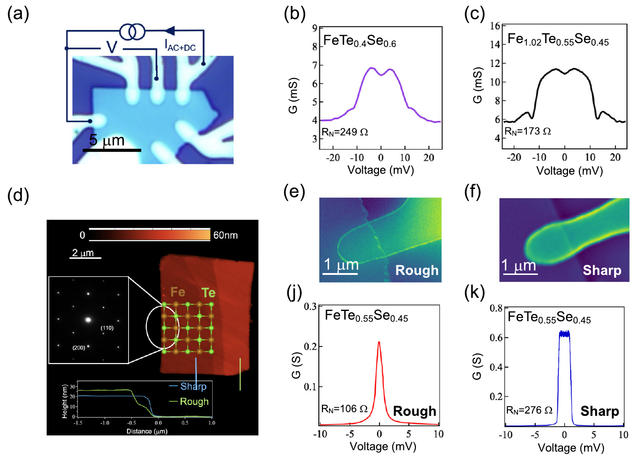
Calculations suggest atomic vacancies could help shape topological electronic phases. The October journal milestone builds on a March preprint; a working device remains undemonstrated.
Research3 min read
A new theory paper clarifies what correlations can establish and which ambiguities remain inside device-independent certification.
Research2 min read
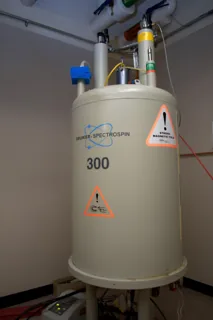
A local-probe NMR experiment reaches journal publication, with a clear boundary between spectroscopy and a working quantum register.
Research3 min read
The accepted GaAs study reports a 4.05 ns gate and makes the supporting feedback overhead explicit.
Research2 min read
The Kaggle challenge uses kickmix to seek smaller quantum circuits. Randomized tests check approximate correctness under stated conditions.
Research2 min read
An accepted physics paper uses a qubit probe to test nonclassical behaviour. Its conservation-law and measurement conditions are essential to the result.
Research2 min read
A Northwestern experiment brings a positron under quantum control. The next question is whether matter and antimatter match as precisely as physics expects.
Research2 min read
New measurement protocols aim to reveal motion as well as position. They work within quantum uncertainty, not around it.
Research2 min read
A historical preprint transcribes a forgotten model from the 1940s. It is a window into an old debate, not proof that quantum physics is wrong.
Research2 min read
Newly published transport measurements probe an unusual boundary response. They do not yet establish a working topological qubit.
Research3 min read
A peer-reviewed result strengthens bit-flip protection while keeping the comparison with phase errors visible.
Research3 min read
Optical quantum-state smoothing improves retrospective estimates, with the assumptions about missing information kept explicit.
Research2 min read
A neutral-atom co-design study connects physical noise, logical operations and application costs. Its resource gains remain conditional simulation results.
Research2 min read
Three demonstrators bring core error-correction operations onto hardware. The company explicitly says its logical error rate is not yet below threshold.
Research2 min read
An analysis of small entangled photon states tracks false heralds and distinct error channels. Conditional state quality alone does not measure useful output.
Research2 min read
A propagation-assisted scheme lowers logical failure in specified simulated Clifford circuits. Runtime and memory scaling remain unquantified.
Research3 min read
More than 600 optical sites bring uniformity, alignment and stability into focus. Cavity count is not an entangled-qubit count.
Research3 min read
A classical emulator reproduces selected tests used in photonic advantage claims. Passing those tests does not make every sampling problem easy.
Research3 min read
Superconducting processors probe competing order in a programmed spin model, with finite-size and finite-depth limits attached.
Research3 min read
A two-laser microresonator advances one link in an optical clock’s measurement chain. A portable instrument needs more than a smaller comb.
Research3 min read
A trapped-ion experiment uses both internal spins and collective motion to represent field dynamics. The journal publication follows a 2025 preprint.
Research3 min read
Two ion motional modes undergo a coherent exchange operation. The gate’s exponential name describes its mathematics, not a speed advantage.
Research3 min read
A levitated nanoparticle resolves tiny mechanical impulses from gas molecules. Detection thresholds and event selection determine what can be counted.
Research3 min read
A rectangular surface-code memory improves as one dimension grows. Longer sequences reveal why the duration of the test matters too.