Research6 min read
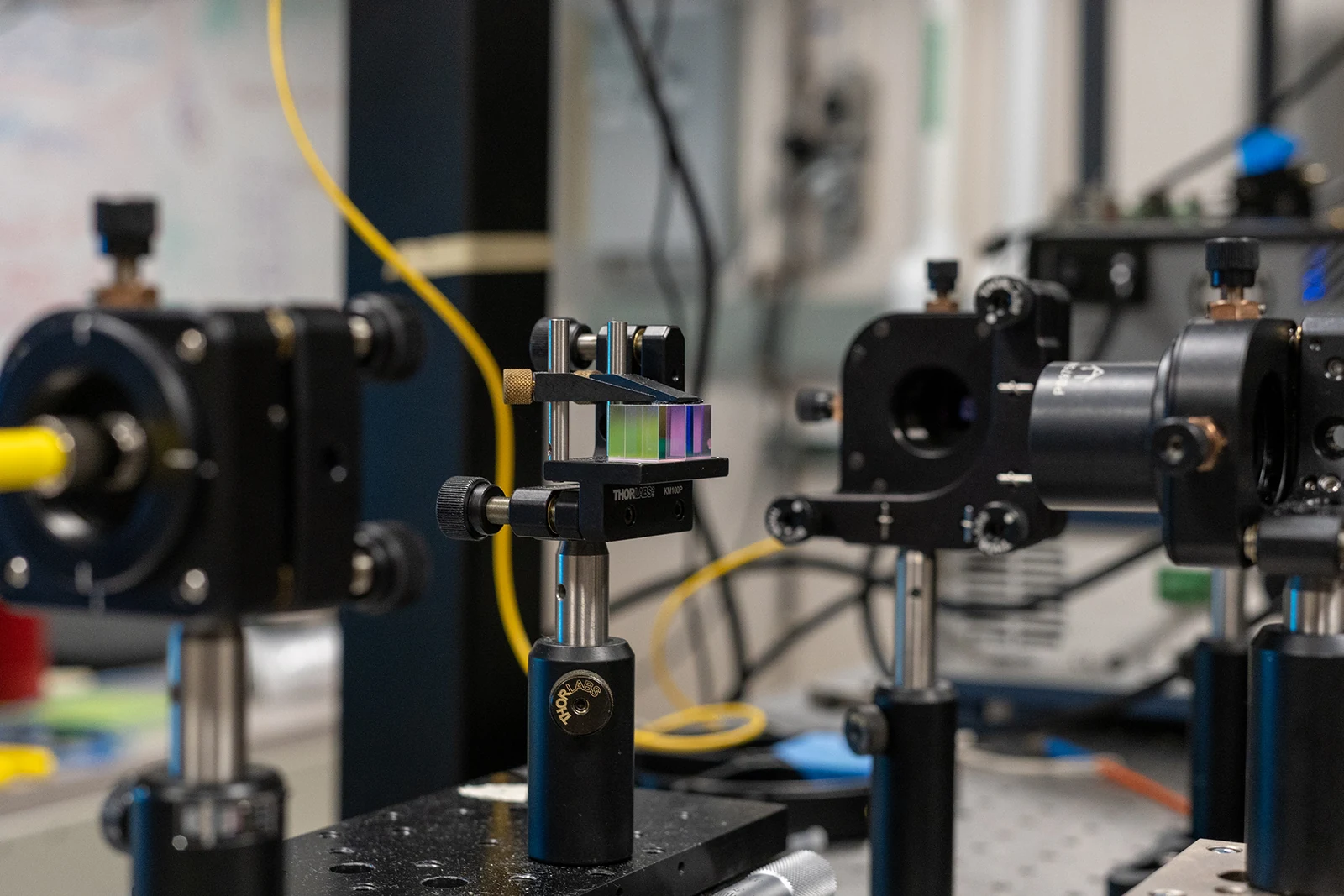
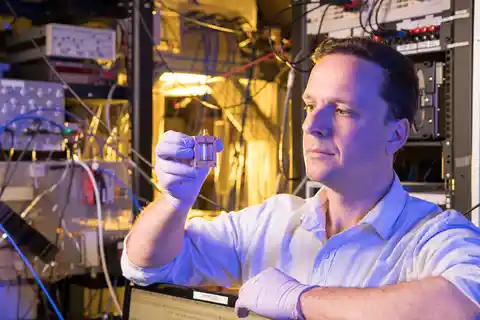
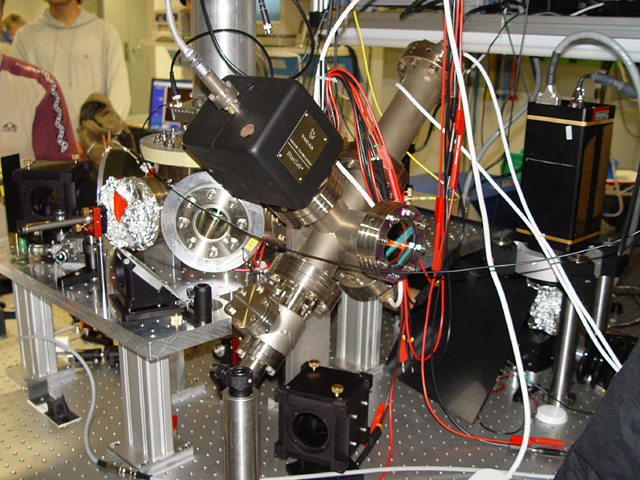
An October 6 preprint puts quantum-memory tests on a common footing. Its experiment shows why high conditional fidelity can coexist with low retrieval efficiency.
Hardware2 min read
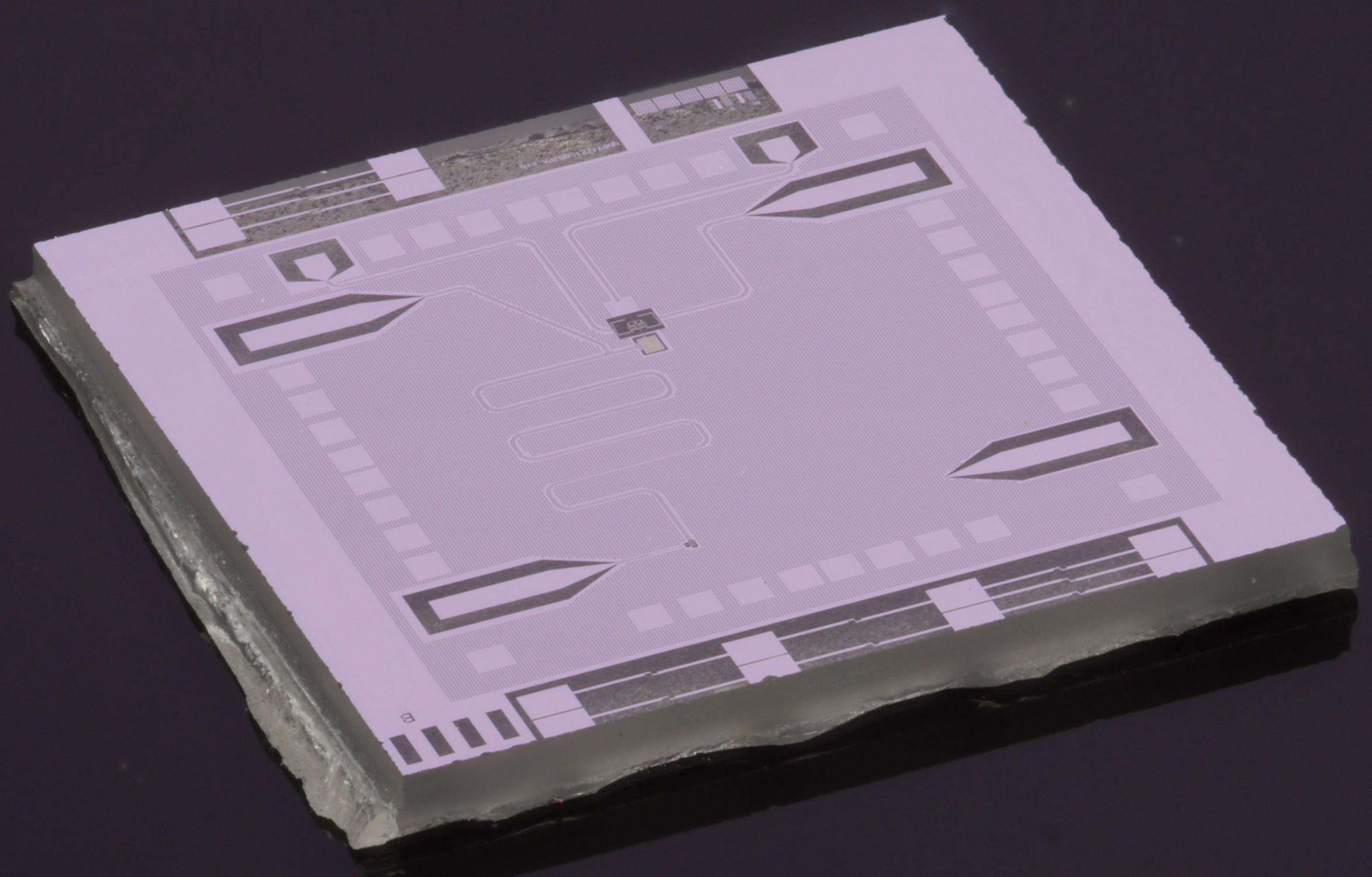
An October 6 announcement describes a silicon-nitride cavity prototype fabricated by Honeywell Aerospace. The manufacturing route matters, but it is not yet a performance or production-yield benchmark.
Research2 min read
An October 2 preprint reports modular neural decoding of IBM memory and lattice-surgery experiments. Reusing the architecture reduces redesign, but live processing speed remains unmeasured.
Research3 min read
qBitTensor says two independent solvers found the hidden outputs of its 48–56-qubit peaked circuits after a three-month stand. The implementations are not yet public, so the result is a red-team report—not an independently reproduced benchmark.
Research3 min read
Two theory papers draw a geometry boundary: depolarizing noise lets shallow circuits on a line break into classically simulable pieces, while a planar construction still separates from AC0 below a threshold.
Research2 min read
A simulation study replaces a destructive diagnostic with mid-circuit information and finds protocol-dependent overheads—from 10% to about 5×.
Hardware2 min read
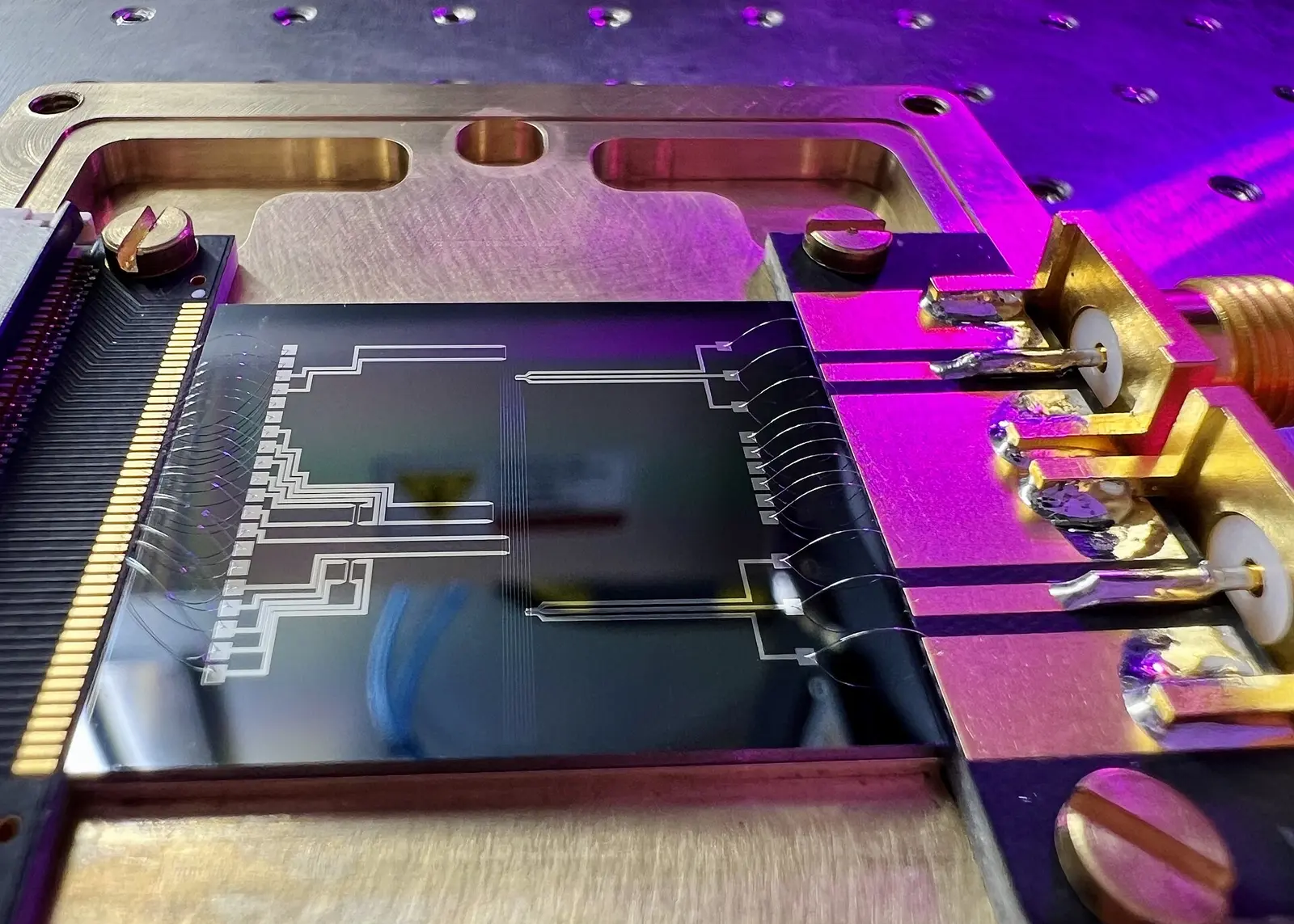
A new preprint reports two tunable quantum-dot emitters, cryogenic routing and single-photon tests in one GaAs circuit. The integration matters more than the device count.
Business + Policy3 min read
A company-reported beta software release makes quantum error-mitigation workflows inspectable and customizable while leaving hardware noise and sampling cost intact.
Research2 min read
A new theory result uses persistent quantum memory to decode weak coded rotations that comparable classical-memory receivers lose.
Research2 min read
A biphoton frequency-bin experiment reconstructed a 100-dimensional state from 1.9% of a conventional measurement set by exploiting sparsity.
Research2 min read
Standard Clifford+T synthesis gave the wrong transport exponent in a Heisenberg-model test. A measurement-assisted compiler preserved SU(2) exactly and used about five times fewer T gates at matched accuracy.
Research2 min read
Circuit simulations suggest flat roughly 100-qubit modules with sparse boundary connections could cut memory overhead tenfold or more versus surface codes.
Research2 min read
A compressed 420-gate workflow on Forte Enterprise reconstructed how a model magnetic spectrum changes with field, then checked the result against tensor networks and neutron data.
Research2 min read
Tsinghua simulations rank each circuit component by its contribution to logical failure, then show targeted improvements beat the same budget spent at random.
Research2 min read
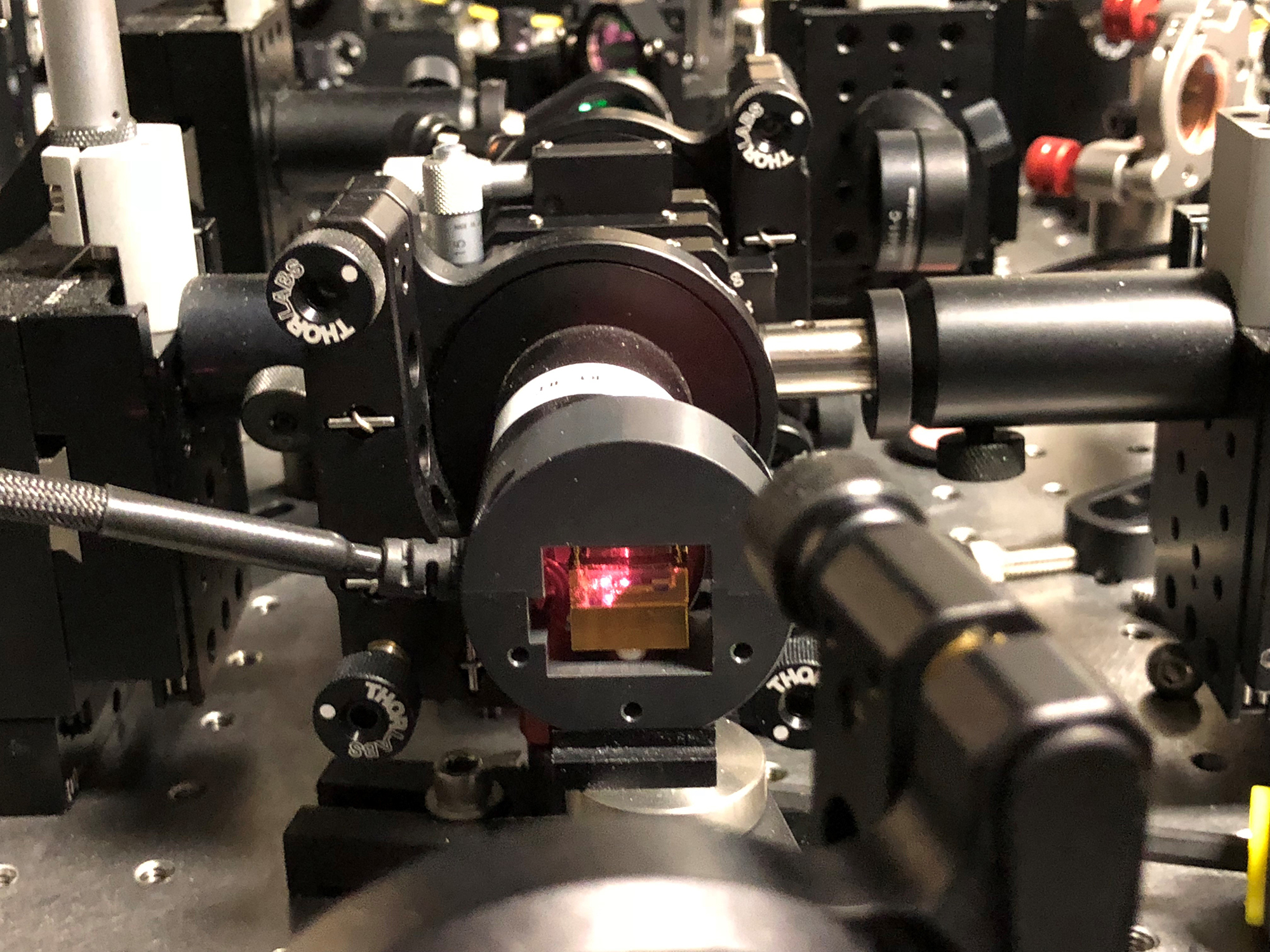
esQueranto puts photon-number physics and structured light in one differentiable JAX program, so researchers can optimize optical parameters instead of only sweeping them.
Research2 min read
A new preprint models an adaptive attacker that follows changing channel noise. It does not show a breach of deployed QKD equipment.
Research2 min read
A new model predicts electric-field noise from dielectric and metallic losses and comes within a factor of four for one tested trap.
Research2 min read
A new preprint uses neural networks to flag likely decoding failures. Large error reductions apply to retained simulated results, with a cost in discarded attempts.
Research2 min read
ORNL highlights a smaller phase-estimation circuit. The useful question is whether fewer gates also make a complete calculation more practical.
Research3 min read
A blinded study points to nanoscale oxide and etching differences as clues to uneven qubit lifetimes.
Research3 min read
A cavity changes how a quantum dot releases light, improving photon interference while separating the useful signal from the excitation laser.
Applications3 min read
A Japanese consortium plans to combine AI, quantum computing and immunology to design neoantigen candidates. This is a research pipeline, not a cancer cure or a quantum-advantage result.
Research2 min read
A levitated nanosphere’s motion became entangled with light leaving an optical cavity. The intriguing part is the interface, not a finished quantum memory.
Hardware2 min read
Dirac-3S targets larger photonic optimization problems. The useful comparison starts with what its variables represent and how an answer is evaluated.