Research2 min read
A 2026 experiment revisits a gravity-inspired model of information transfer. The surprise is real; a tunnel through space is not.
Research2 min read
A quantum annealer explored how an apparently stable state falls apart. Its “bubbles” stayed inside an engineered model, not our universe.
Research2 min read
Researchers held one branch of an atomic wave still while another fell. Reuniting them revealed a distinctive gravitational phase.
Research2 min read
A 62-kilometer fiber link near Washington carried entanglement through a messy real-world environment. Reliability, not distance, is the story.
Research2 min read
A new Chalmers method targets a slow step in controlling protected quantum information, not every calculation a quantum computer performs.
Research2 min read
An experiment with vibrating aluminum membranes shows how mechanical motion can join the quantum-information toolkit.
ResearchExplainer2 min read
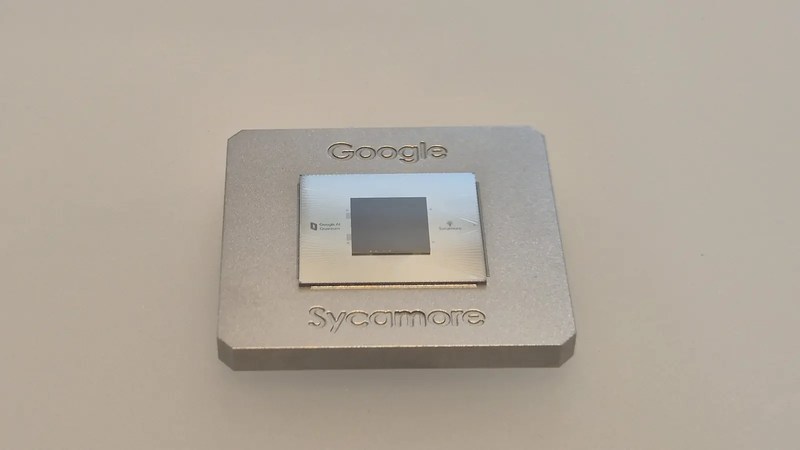
Google’s qubits settled into an unusual repeating rhythm, giving researchers a new way to explore how matter behaves.
ResearchExplainer2 min read
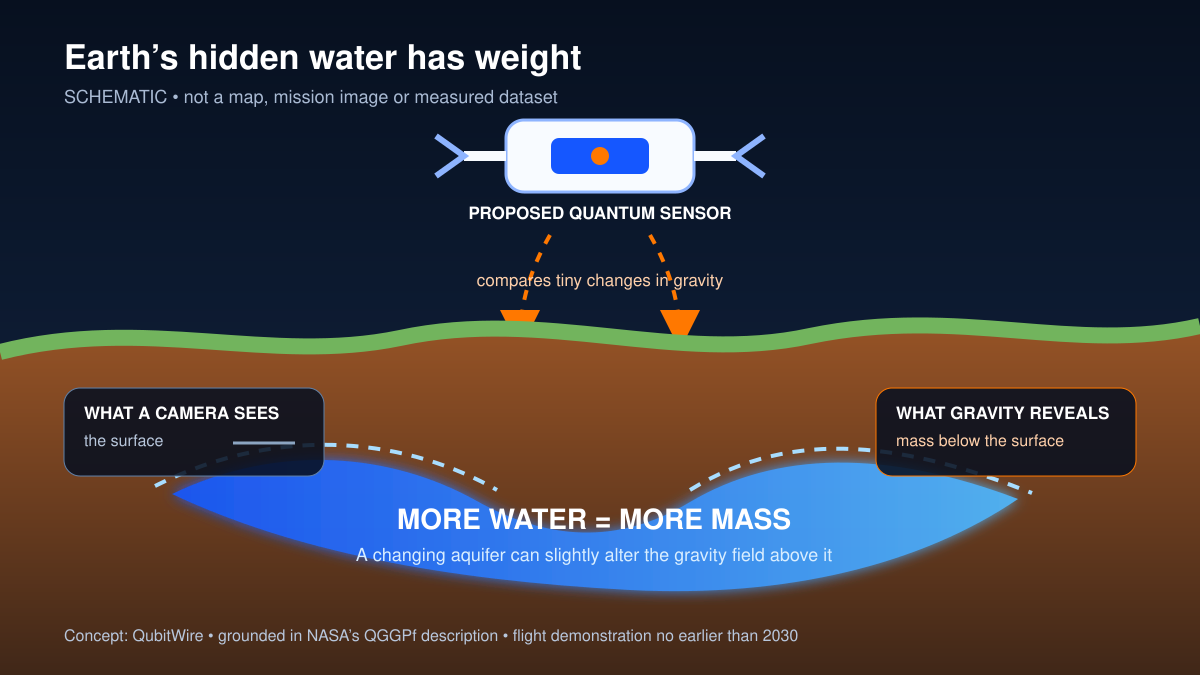
Cold atoms could let an orbital pathfinder detect tiny gravity differences caused by shifting water and ice—but it is not mapping aquifers yet.
Research2 min read
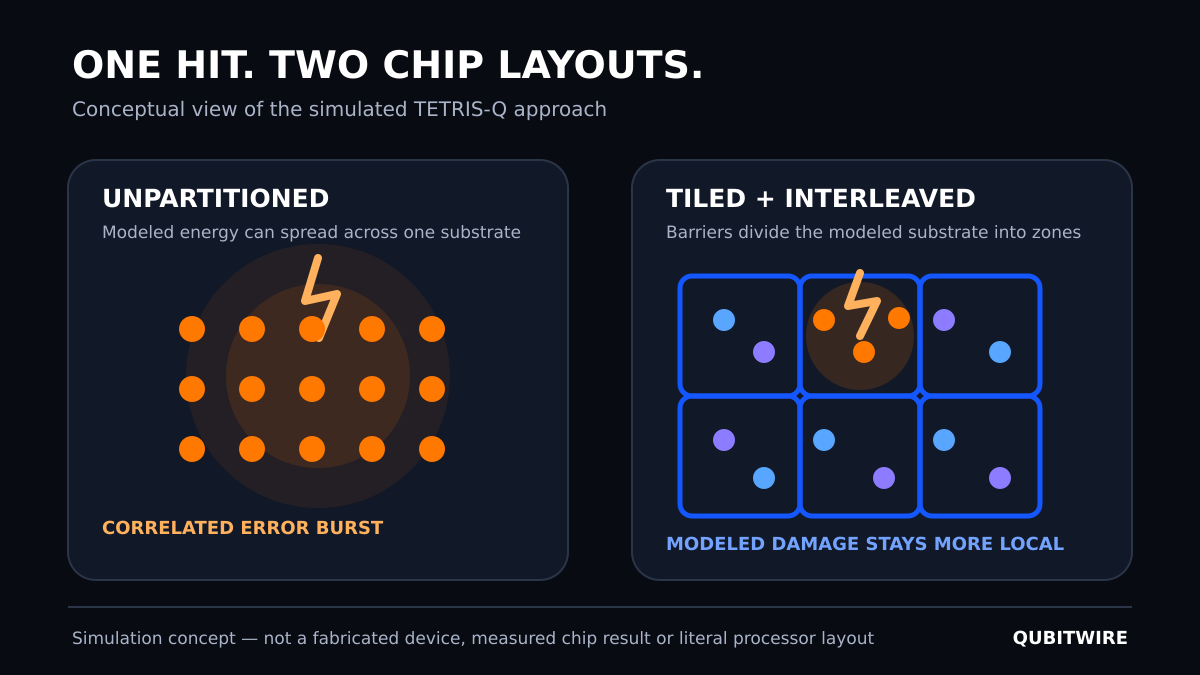
A simulated chip layout uses barriers and shuffled error-correction codes to keep one radiation hit from becoming a whole-chip problem.
ResearchExplainer2 min read
The state can arrive without a travelling original. But the receiver still needs a message, the sender loses the state, and the connection gets used up.
ResearchExplainer2 min read
Repeated results can look inconsistent even on a perfect quantum device. The useful answer often lives in the pattern that emerges across many runs.
Research2 min read
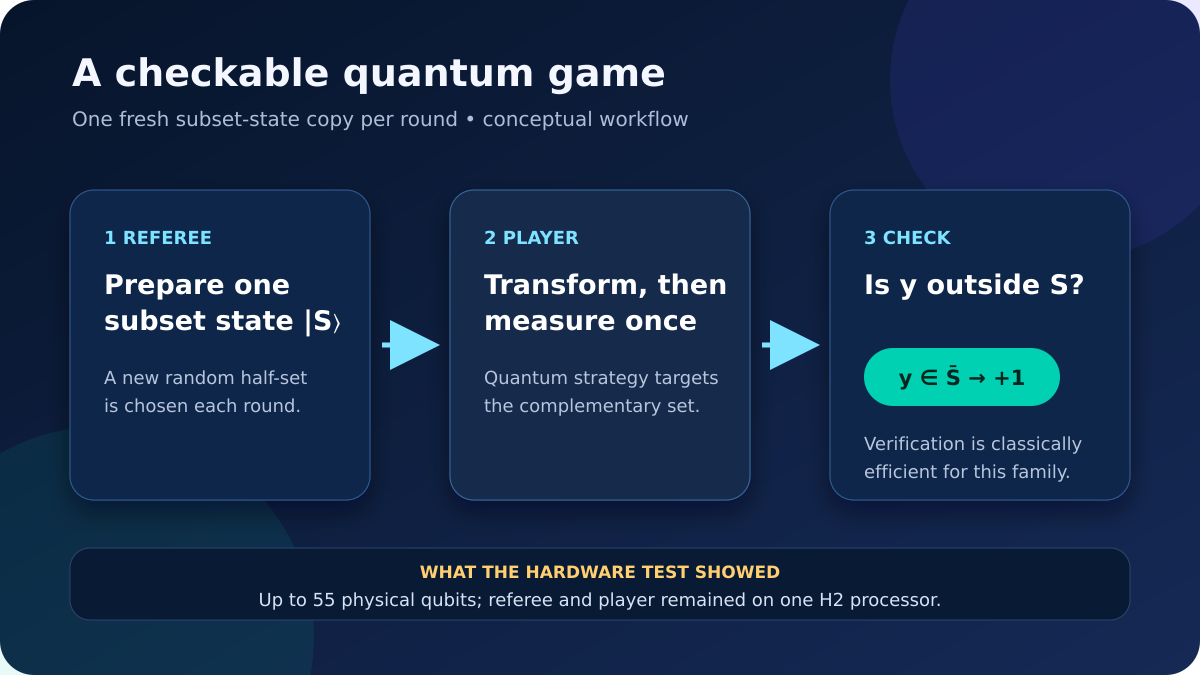
H2 beat the optimal classical score in an efficiently checked experiment, but this was a device test—not a useful computational speedup.
Research2 min read
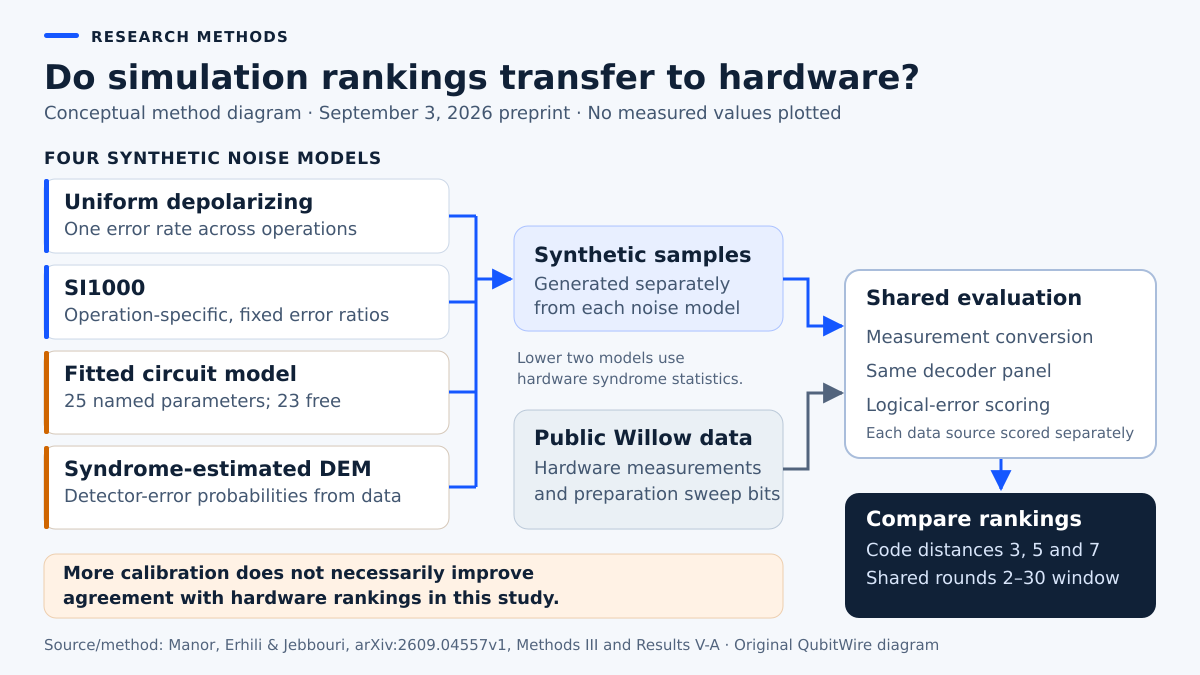
A preprint using Google Willow records separates predicting error rates from choosing error-correction software.
Research2 min read
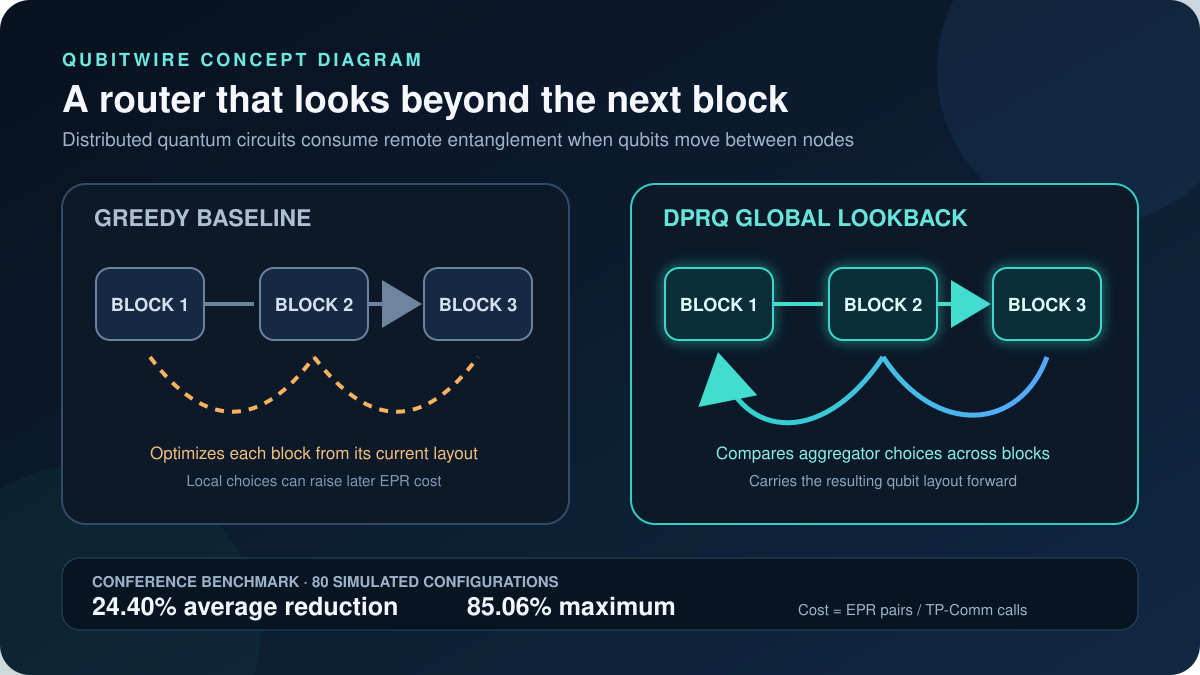
A conference benchmark reports lower EPR-pair use than QuComm, but only in simulation and under a matched communication protocol.
Research2 min read
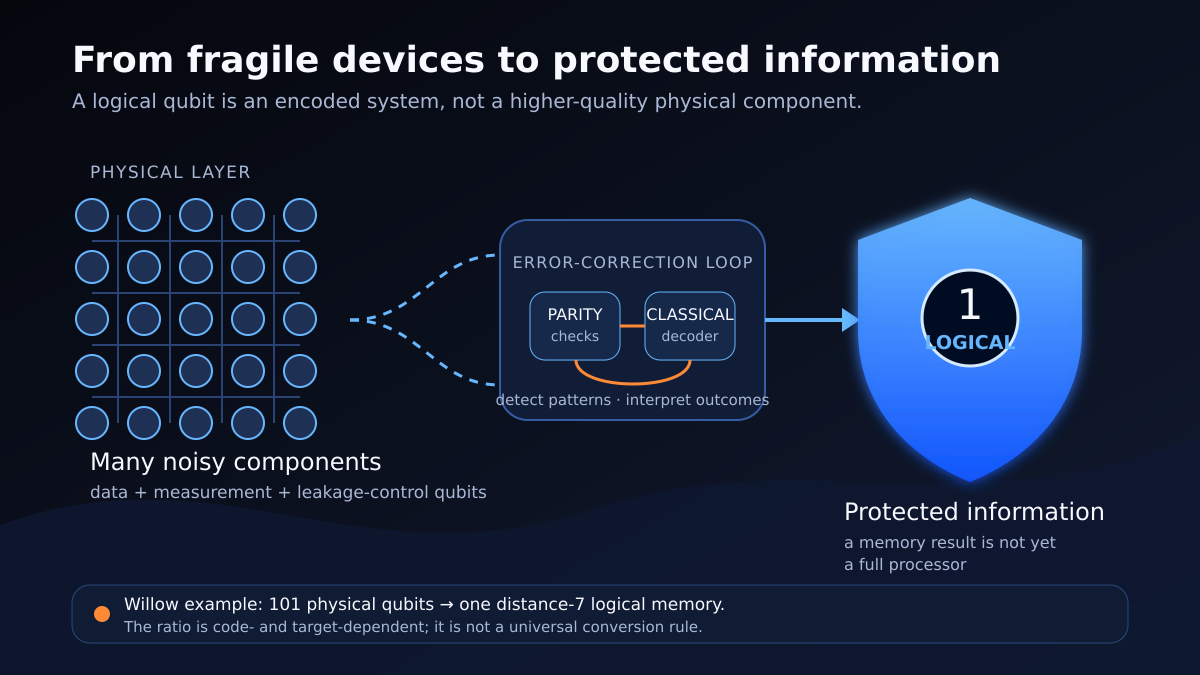
Physical qubits are the hardware. Logical qubits are error-protected systems built from them—and the conversion is never a universal ratio.
Research2 min read
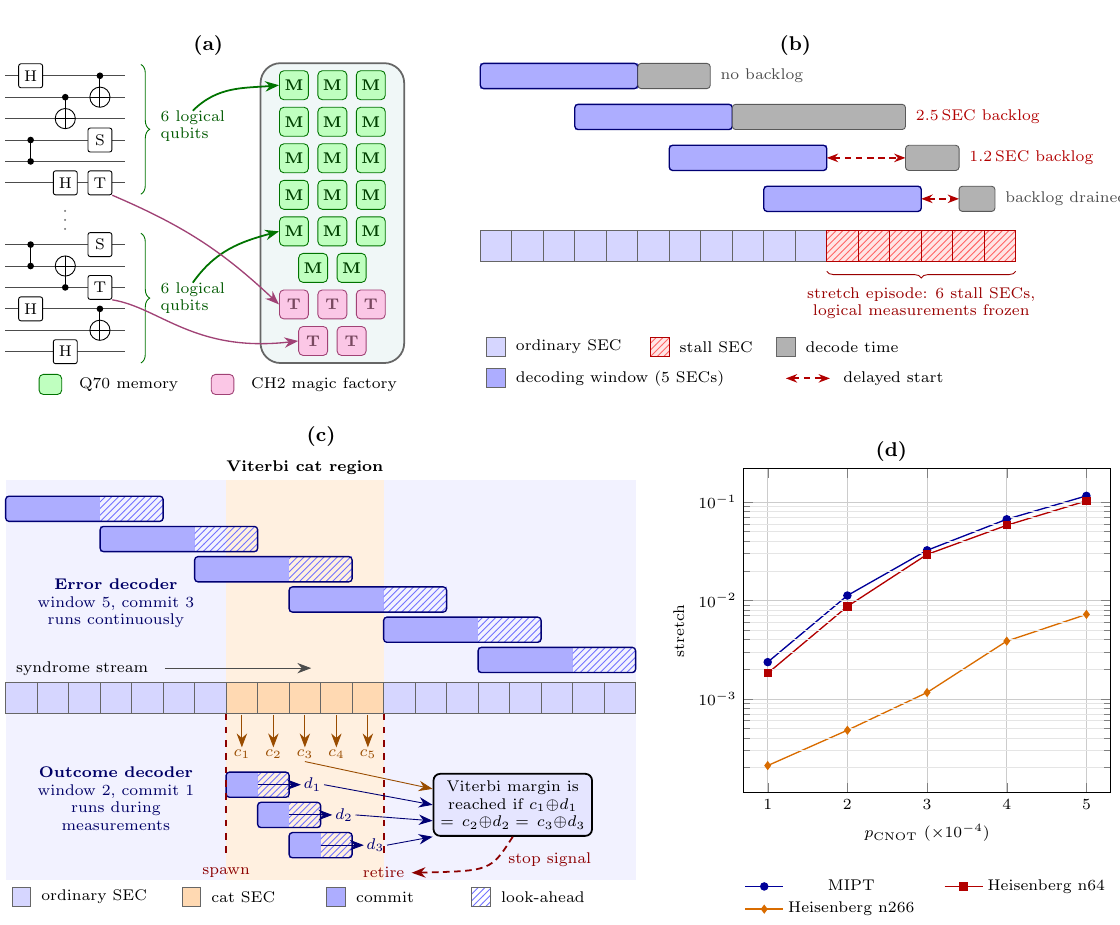
A simulated trapped-ion architecture kept decoding delay below 12% across three compiled workloads, but no fault-tolerant quantum computer ran the experiment.
Research2 min read
A superconducting design divides storage and interaction between two coupled modes, with faster gates predicted in simulations.
Research2 min read
Princeton-led MARQUIS will bring materials science and semiconductor processing to the Josephson junction, a core superconducting-qubit component.
Research1 min read
A Nature experiment reports an approximately 500-nanosecond entangling gate that largely preserves detectable photon-loss errors.
Research1 min read
The reported experiment embeds error checks in a sampling circuit and uses postselection to improve measured output quality.
Research1 min read
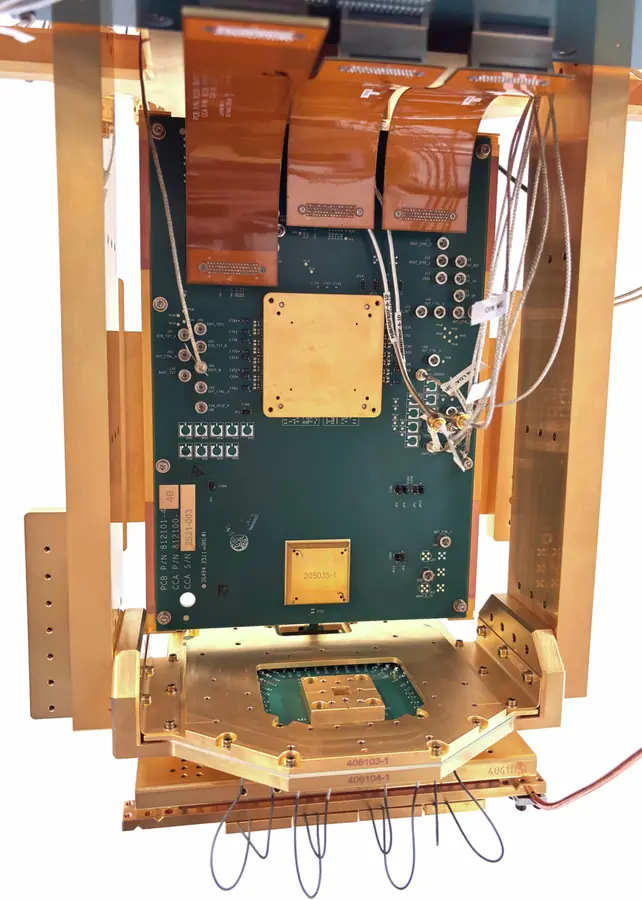
A Nature study combines a 4-kelvin controller, ribbon-cable interconnect and millikelvin silicon quantum-dot processor.
Research1 min read
A reinforcement-learning experiment improves stability under injected drift and fine-tunes an already calibrated processor.
Research1 min read
A 54-qubit experiment creates a topologically ordered state and uses its anyonic excitations to demonstrate a universal gate toolkit.
Research2 min read
Quantinuum’s trapped-ion machine shows why counting qubits is only the start of comparing quantum computers.