Applications2 min read
IonQ’s latest radar study asks a practical question: can a quantum model help separate real change from a noisy background?
Research2 min read
A new benchmarking framework asks how much useful circuit a machine can handle, and how quickly it can handle it.
Business + Policy2 min read
Riverlane’s planned Maryland headquarters puts error correction, university collaboration and the people building the stack in one story.
Research2 min read
Michelle Y. Simmons, John Preskill and Krysta M. Svore offer three different ways to understand the work ahead.
Business + Policy2 min read
EPB has launched an IonQ system alongside its quantum-networking facilities. The first research agenda includes the local electricity grid.
Business + Policy2 min read
A new Maryland research center is an infrastructure story, but the more useful angle is how ambitious hardware claims will be tested.
Applications2 min read
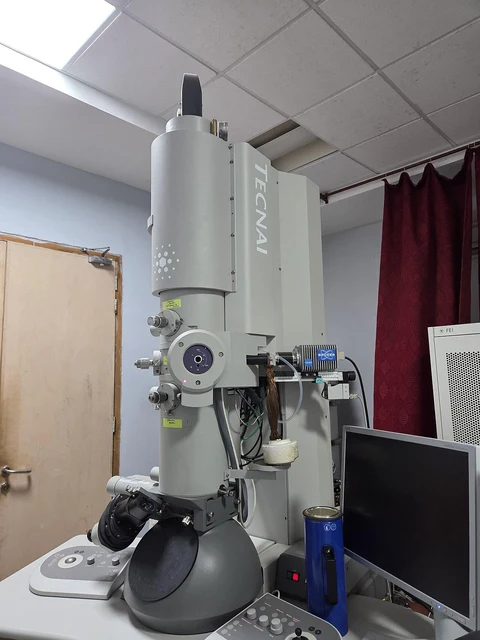
A theoretical proposal connects trapped-ion quantum computing with electron microscopy. The attraction is learning more while doing less damage.
Research2 min read
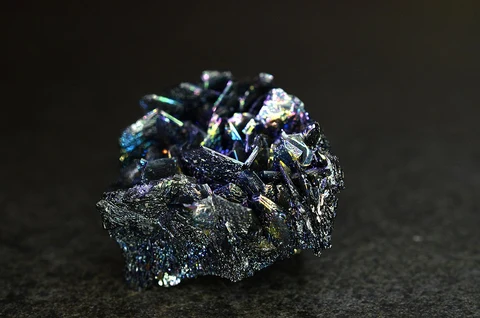
A silicon-carbide experiment moved fragile quantum information into nuclear-spin memory at room temperature. It is a storage result, not a room-temperature supercomputer.
Research2 min read
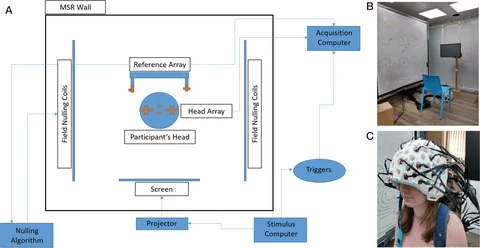
Stanford's magnetic brain-imaging system uses quantum-sensitive sensors close to the scalp. Better measurement is the aim; this is not a mind-reader.
Research2 min read
A simulator using 13 active trapped-ion qubits explored how an electric-field string breaks in a simplified particle-physics model. The behavior began near the edges.
Business + Policy2 min read
A planned five-qubit machine in Campinas and cloud access to 54 qubits in Europe will give researchers hands-on hardware and a larger remote system.
Business + Policy2 min read
DOE plans up to $215 million for protected qubits and long computations, with scientific demonstrations and verification central to the program.
Research2 min read
Researchers transferred an image through 100 separately addressable optical modes, testing how quantum state transfer can operate in parallel.
Research2 min read
A mathematical comparison reveals advantages for quantum circuits on specific tasks, with the language-model architectures and resource limits carefully defined.
Applications3 min read
Superconducting detectors measured important X-ray features more precisely, helping scientists interpret overlapping signals from nuclear material.
Research2 min read
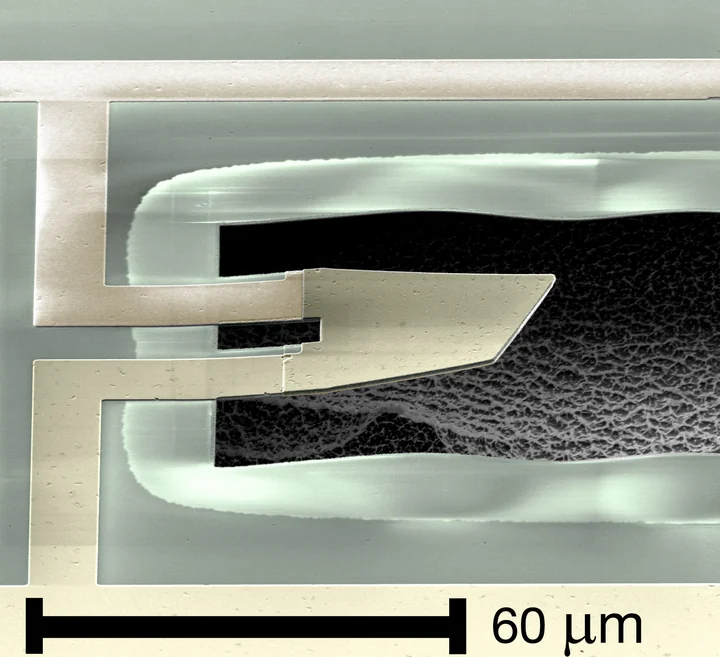
A microscopic resonator revealed the sudden loss of one phonon. Repeated measurements made the fleeting change visible.
Research2 min read
A room-temperature experiment takes a faster route to entanglement. The important number is four, not millions.
Applications2 min read
The hard part is not another futuristic chip. It is finding chemistry that separates valuable materials more effectively.
Research2 min read
An IBM preprint explores how to reduce the measurement burden behind cleaner answers. Its 63-fold figure needs a careful label.
Business + Policy2 min read
A new Alice & Bob and CEA collaboration is about making different machines work together, not declaring a winner.
Research2 min read
A newly published photonics result puts several essential functions together. That is different from fitting an entire quantum computer on a chip.
Research2 min read
The 13,000× benchmark estimate grabs attention. A result another quantum computer could check is the more useful idea.
Applications6 min read
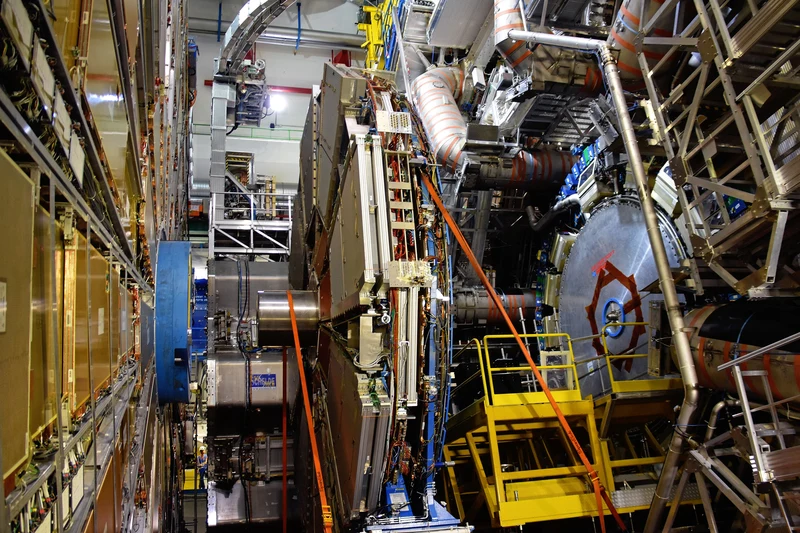
The collider is in a major upgrade shutdown. Quantum research is exploring possible tools for future analysis—not replacing the LHC or its computing grid.
Research5 min read
A new blueprint turns helium’s tiny mass into a computing resource. The surprising part is what the atoms would do—not what they would cool.