Hardware4 min read
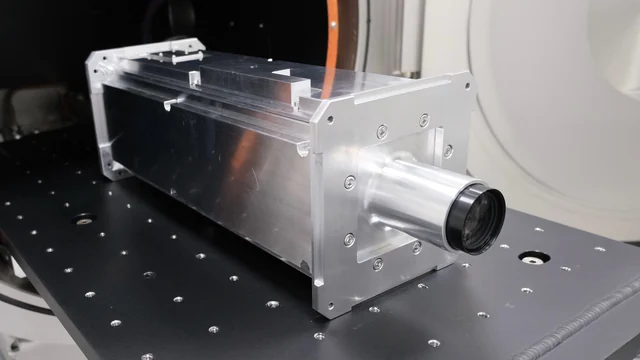
An October 6 manufacturing agreement targets low-loss optical circuits and photon-counting detectors. The next evidence should show whether the transferred process delivers repeatable components that meet a quantum system’s requirements.
Hardware4 min read
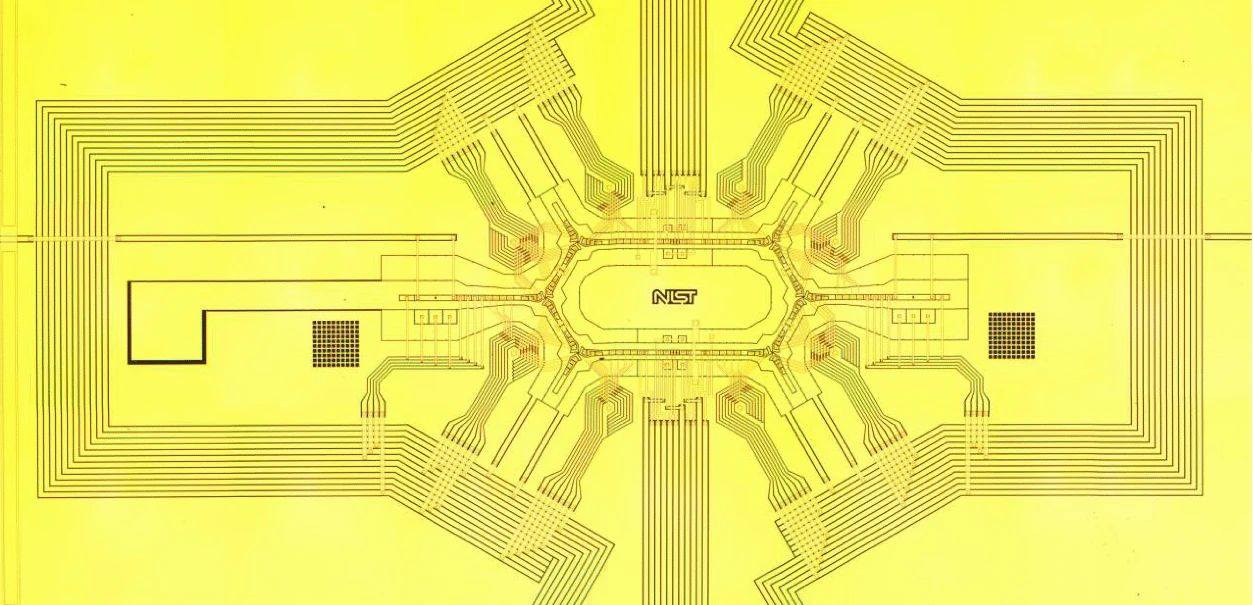
An October 6 preprint automates superconducting-chip layouts. Current project documentation says the public release does not yet include the routing stage.
Hardware6 min read
An October 6 preprint demonstrates a fiber-connected telecom photon source. More pump power brings more pairs, but their quantum-state quality falls.
Hardware2 min read
An October 6 announcement describes a silicon-nitride cavity prototype fabricated by Honeywell Aerospace. The manufacturing route matters, but it is not yet a performance or production-yield benchmark.
Hardware2 min read
A new preprint reports two tunable quantum-dot emitters, cryogenic routing and single-photon tests in one GaAs circuit. The integration matters more than the device count.
Hardware2 min read
Dirac-3S targets larger photonic optimization problems. The useful comparison starts with what its variables represent and how an answer is evaluated.
Hardware3 min read
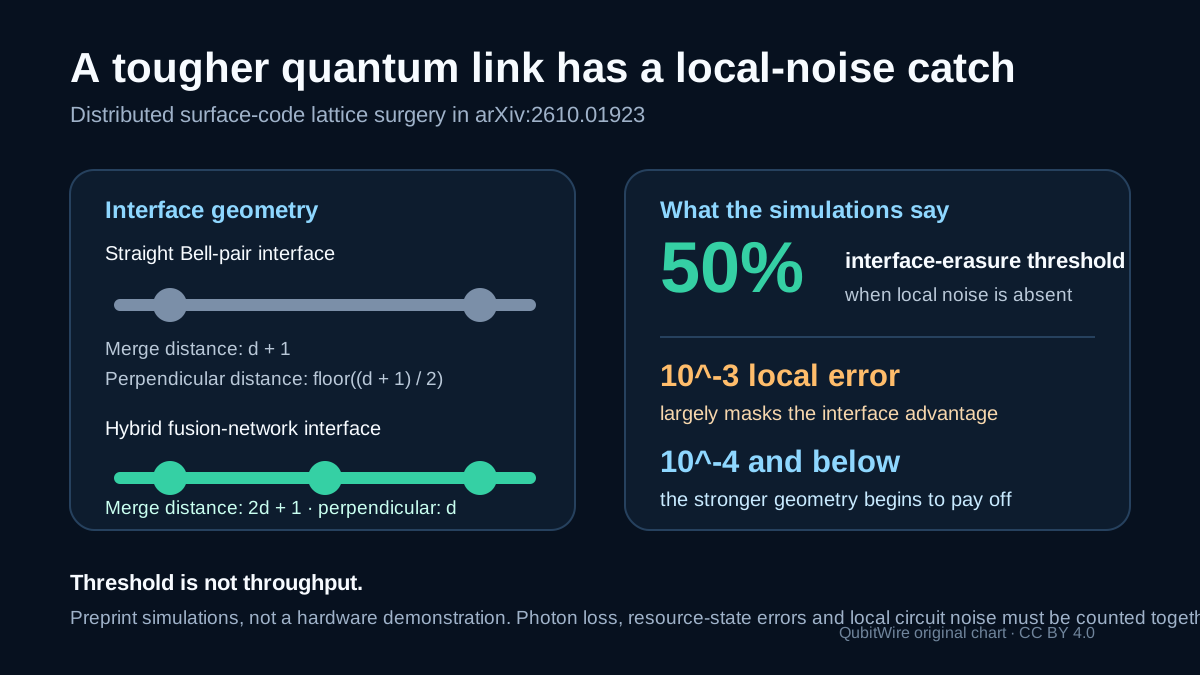
A distributed lattice-surgery design reaches a 50% interface-erasure threshold only when local noise is absent. At one error in a thousand, the advantage largely disappears.
Hardware3 min read
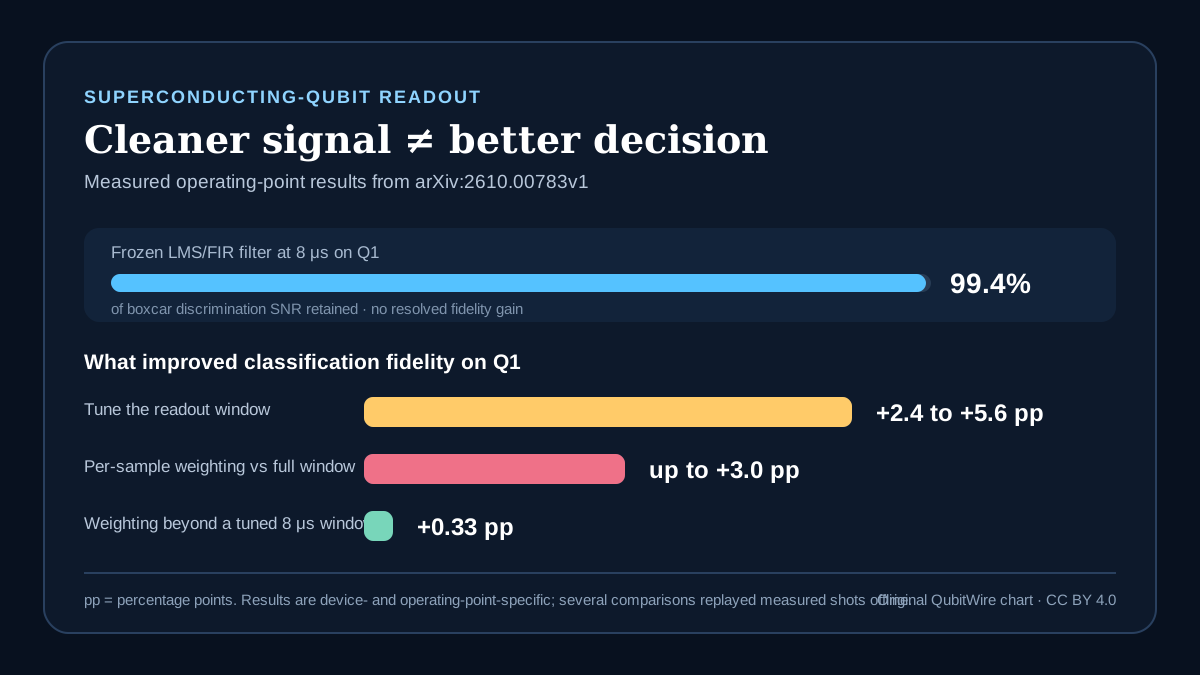
A superconducting-qubit study found that a tested adaptive filter reduced trace noise without resolving a fidelity gain. Choosing the measurement window did more.
Hardware3 min read
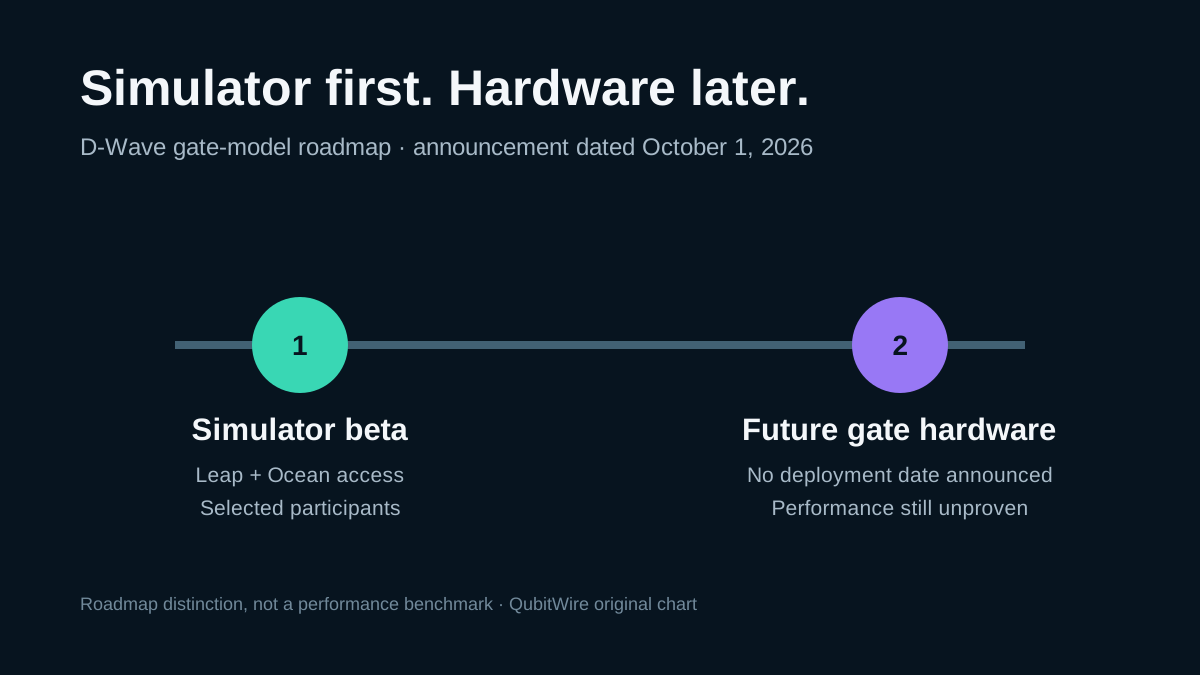
A new beta lets selected teams explore error-aware programs. It is preparation for future dual-rail hardware, not access to that hardware today.
Hardware3 min read
A new memory architecture separates storing quantum information from manipulating it. The distinction may matter as much as adding another qubit.
Hardware3 min read
A small photonic experiment survived a trip to orbit. Its struggle with sunlight may be more revealing than the launch.
Hardware2 min read
Superion 256 turns the spotlight from qubit counts to production costs, factory capacity and the deliveries promised for 2027.
Hardware2 min read
A new hardware test asks whether a different kind of quantum computer can benefit from the same software ideas.
Hardware2 min read
The LUMI-IQ plan is a reminder that the quality of quantum information matters as much as the headline qubit count.
Hardware4 min read
Some error-corrected quantum computers need a steady supply of specially prepared states. A laboratory result shows one way to make them cleaner.
Hardware2 min read
A continuously replenished array held more than 3,000 atoms for over two hours. The hard part is replacing them without disturbing their neighbors.
Hardware2 min read
In trapped-ion machines, getting the right qubits together can mean giving the atoms a carefully controlled commute.
HardwareExplainer2 min read
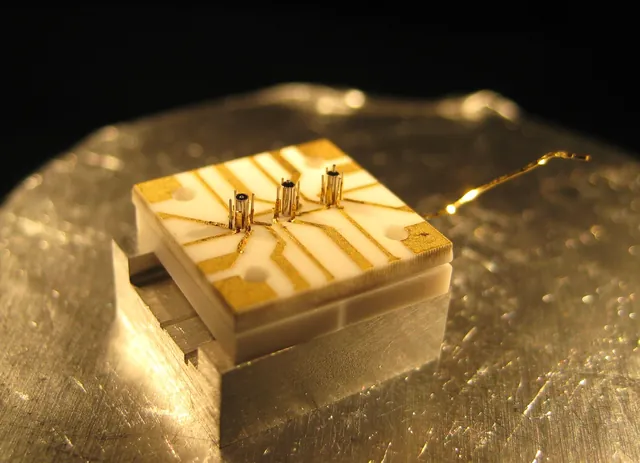
A missing atom can be useful hardware, and different diamond designs have very different ideas about staying cool.
HardwareExplainer2 min read
Laser tweezers turn single atoms into movable quantum bits, and the resulting grid is something researchers can actually photograph.
HardwareExplainer2 min read
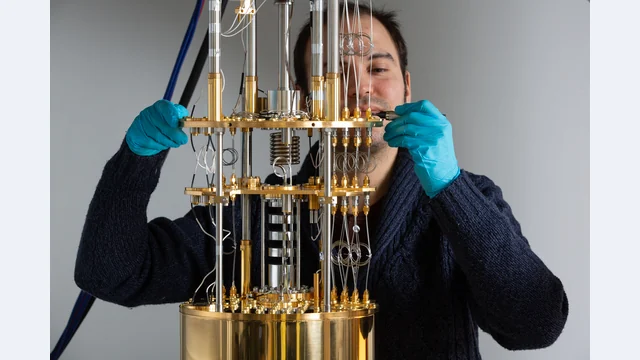
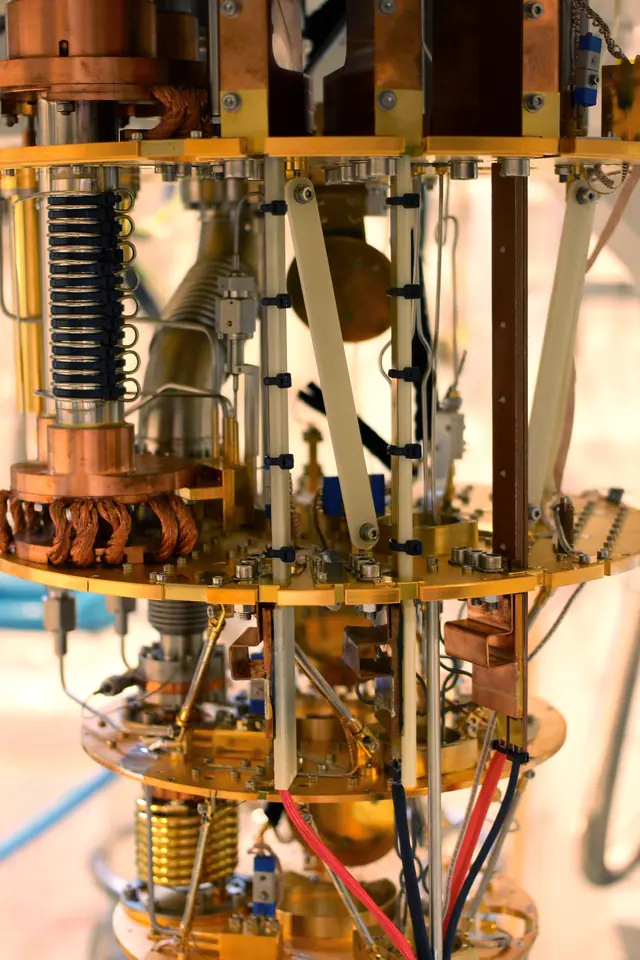
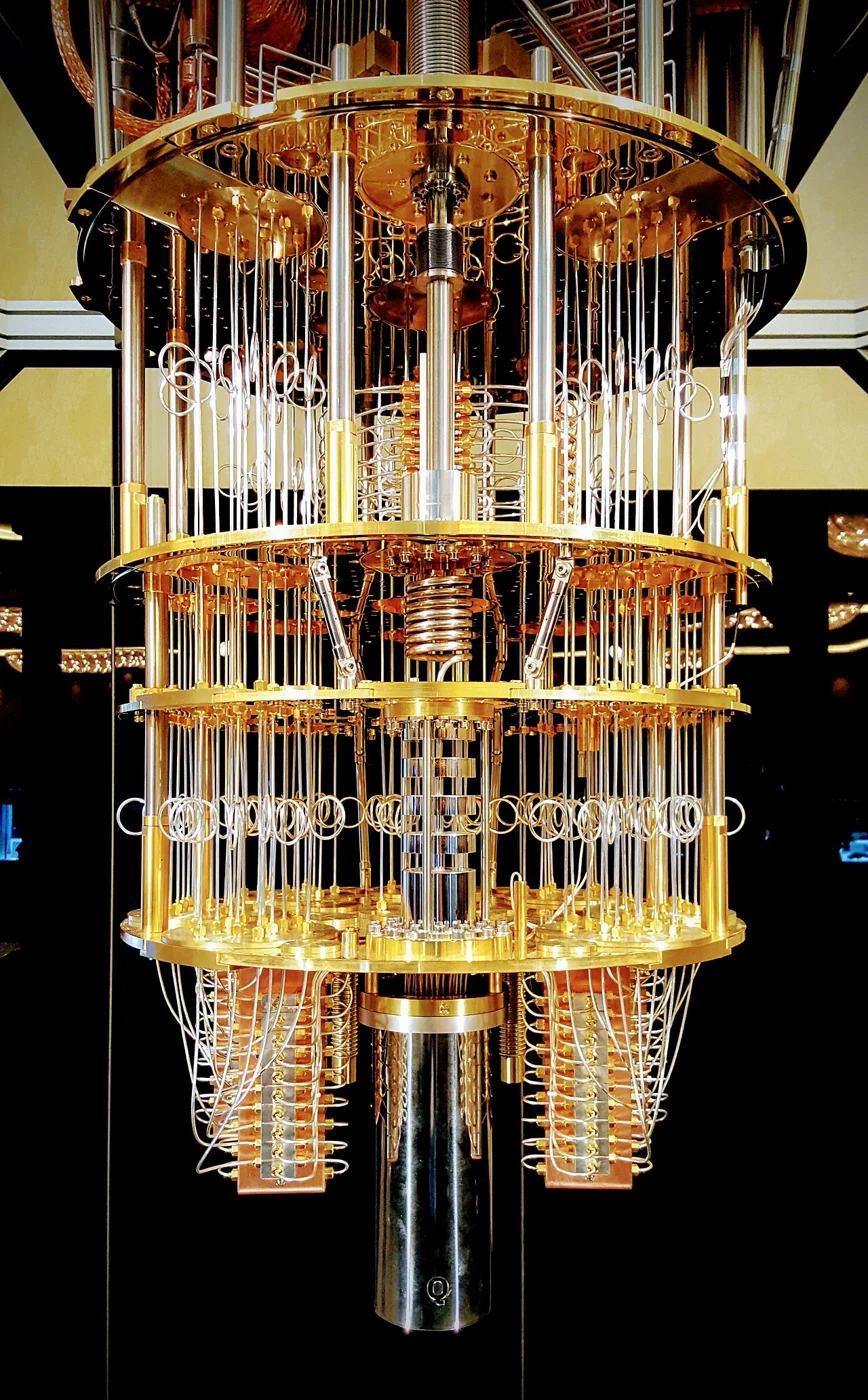
The glamorous hardware in quantum-computer photos has a surprisingly practical job: keeping a tiny processor extraordinarily cold.
HardwareExplainer2 min read
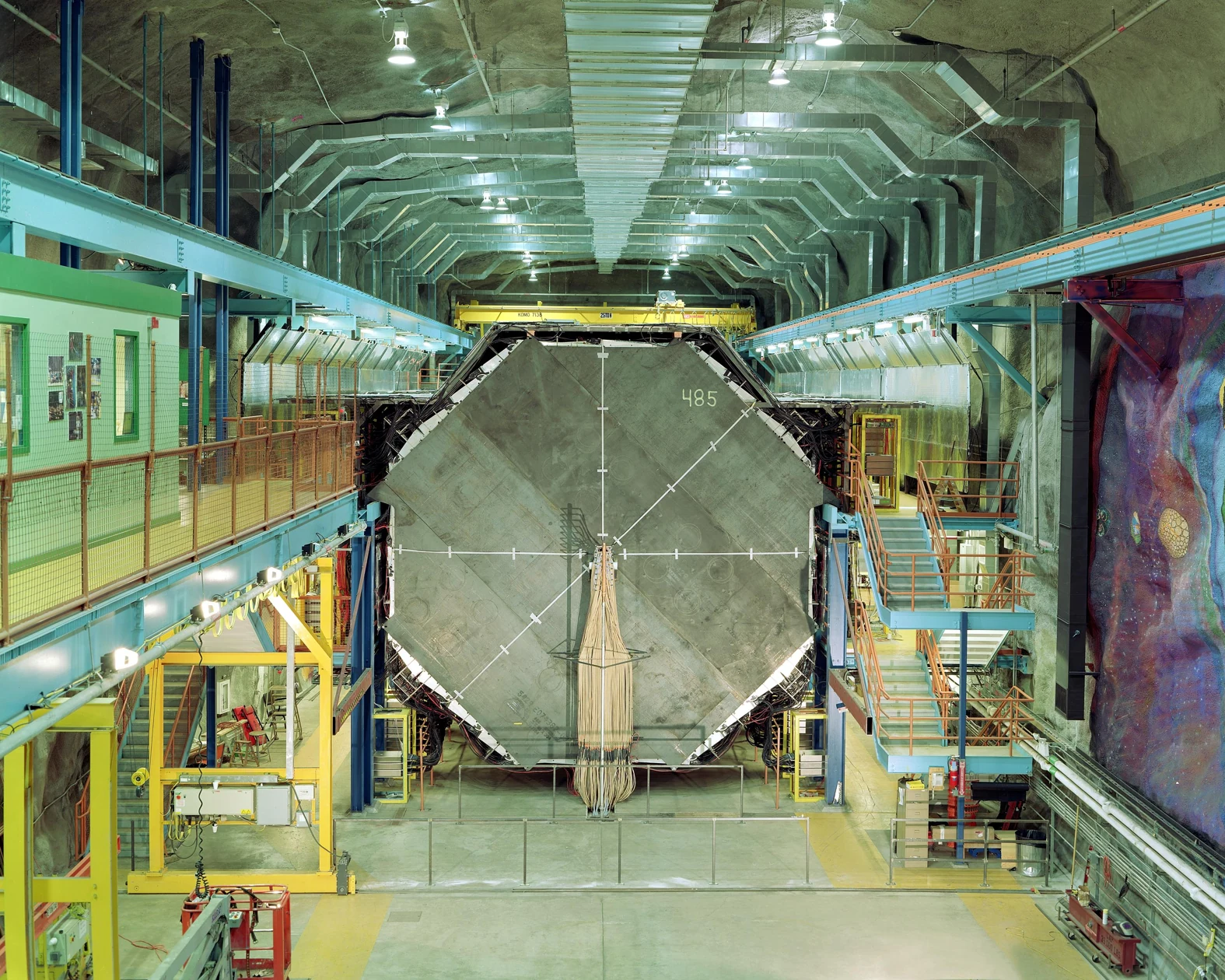
A tiny energy deposit can spread trouble across a superconducting chip. Understanding those bursts takes researchers from particle detectors to underground laboratories.
Hardware2 min read
Qolab will be a lead customer for SkyWater's SC250 wafer platform, but the partners disclosed no new quantum-processor benchmark or shipment.
Hardware2 min read
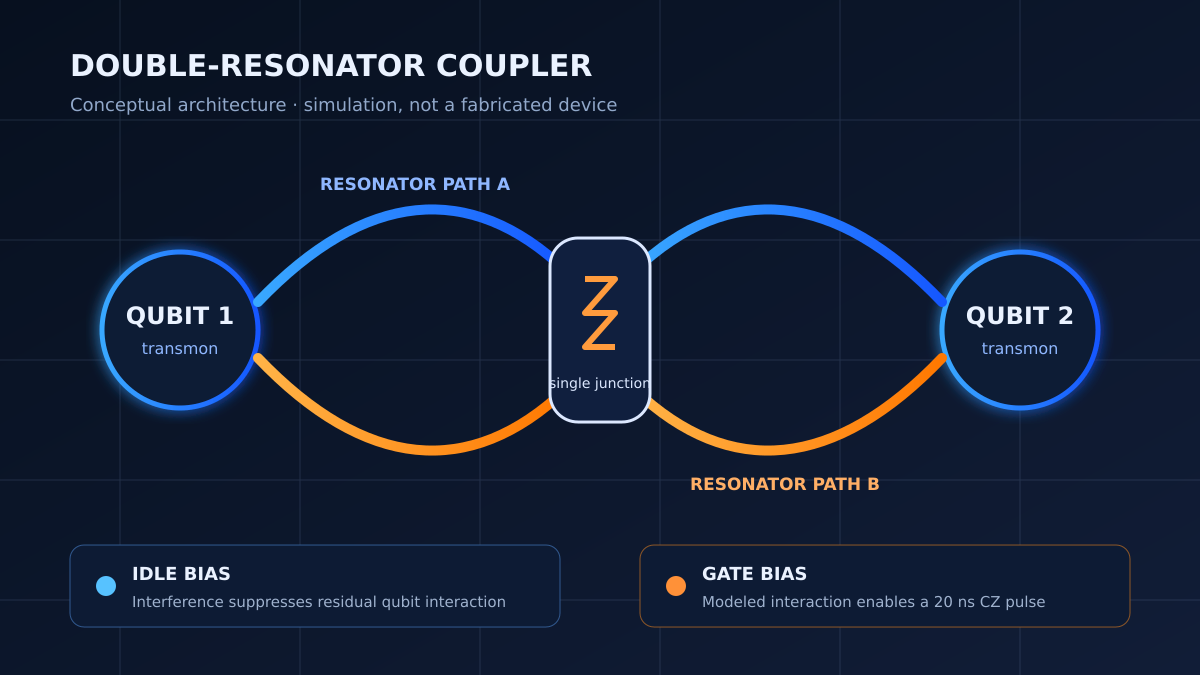
A proposed superconducting circuit uses two resonator paths to suppress idle coupling, but its speed and error figures remain simulation results.
Hardware2 min read
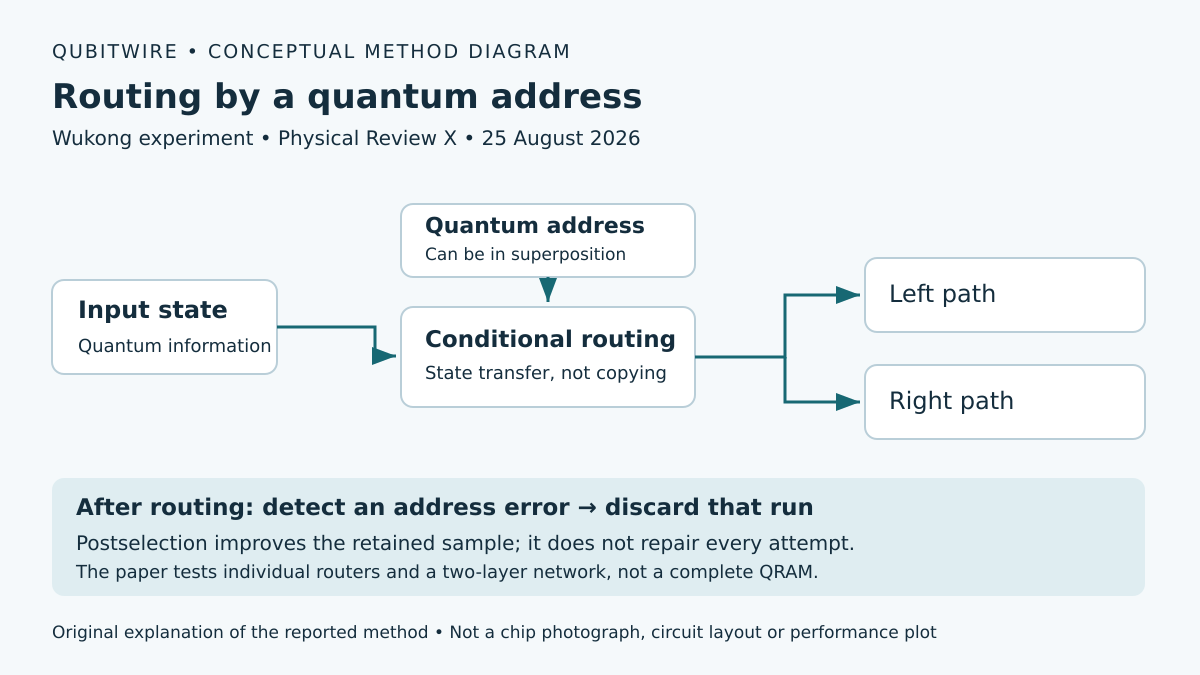
A ten-transmon experiment routes data by quantum address, while 82.4% two-layer fidelity and discarded runs expose the scaling cost.